The terms that decide whether a rare bottle can be trusted — defined plainly. In fine wine, most expensive mistakes begin as vocabulary mistakes.
This glossary is maintained by The Empty Drops, an independent private fine-wine cellar focused on rare bottles, provenance, custody and bonded storage.
The vocabulary of custody · Illustration, not inventory
Provenance
The documented history of a bottle: where it has been, how it was stored, and who has held it since release. Provenance is evidence, not reputation — a certificate is a claim; provenance is the record behind it. For the full framework, see the provenance guide.
Chain of custody
The unbroken, documented sequence of parties and locations a bottle has passed through, from producer to current holder. Each transfer should be traceable: invoices, warehouse records, transfer confirmations. A gap in the chain is a gap in the evidence — the term comes from forensics, and it applies to wine for the same reason.
In bond
The status of wine held in a customs-bonded warehouse with duty and VAT suspended. In-bond wine can be traded and transferred warehouse-to-warehouse without taxes falling due, keeping the bottle inside professional storage throughout. Often abbreviated IB in trade listings.
Bonded storage
Professional warehousing operating under customs bond, with controlled temperature and humidity and documented stock records. Bonded storage is the strongest single storage signal a bottle can carry, because its location and conditions are recorded, not remembered.
Duty paid
Wine on which import duty and VAT have been settled, allowing free circulation. Once duty paid and delivered, a bottle usually leaves professional custody — from that point onwards, its storage history depends on the owner’s word rather than a warehouse ledger.
Ullage
The air gap between the wine and the closure. Ullage grows slowly and naturally with age; excessive ullage for the wine’s age suggests poor storage or a failing cork. Read together with fill level, it is the fastest condition check a buyer can make.
The air between cork and wine · Illustration, not inventory
Where the wine sits in the bottle, read against the neck and shoulder. For a Bordeaux-shaped bottle, into-neck or base-of-neck is expected in young to mature wine; top-shoulder is acceptable in old bottles; mid-shoulder in a young wine is a warning. Burgundy bottles, lacking shoulders, are measured in centimetres below the cork.
From into-neck to mid-shoulder · Illustration, not inventory
The foil or wax covering the cork and bottle neck. An intact, original capsule with no signs of seepage, spinning or re-seating supports authenticity. A cut or replaced capsule is not automatically disqualifying — but it requires an explanation, and the explanation should come with paper.
The capsule, read up close · Illustration, not inventory
OWC
Original Wooden Case
The producer’s original wooden case, ideally with matching lot markings and unbroken banding. An OWC supports provenance because cases assembled later — even from correct bottles — break the physical link to the original release. Full cases in OWC often command stronger confidence, and may outperform loose bottles at resale when provenance and condition are comparable.
The original wooden case · Illustration, not inventory
Ex-cellar / Ex-château
Wine released directly from the producer’s own cellar, often years after the vintage. Ex-cellar stock carries the shortest possible custody chain — one holder between producer and buyer — which is why it commands attention, and premiums, in the secondary market.
Allocation
A producer’s or distributor’s controlled assignment of scarce wine to selected buyers, often conditional on purchase history or on buying less sought-after wines alongside. Allocation systems are why certain bottles rarely appear on the open market — and why their appearance outside those networks deserves scrutiny.
Release
In this cellar’s vocabulary: the moment a recorded bottle is made available to another collector, handled in-bond through CruTrade so the professional storage chain is never broken between cellar and buyer. Releases are occasional and deliberate; the archive is not a rotating inventory.
Recorded, not offered
The status of a bottle that appears in The Empty Drops archive as documentation — identity, condition, storage, custody — without being for sale. A record is evidence of a cellar, not a listing. Most bottles here are recorded; a few are eventually released; some are opened and become notes.
Private cellar
A collection assembled and held by an individual collector rather than a merchant, typically not offered for sale as a whole. Private cellars with documented professional storage are among the most trusted sources in the secondary market — single-owner provenance is the auction world’s favourite phrase for a reason.
Secondary market
All trade in wine after its first sale from the producer or importer: auctions, brokers, exchanges and collector-to-collector platforms. Provenance risk lives almost entirely in the secondary market, which is why custody evidence matters there most — and why the questions in the provenance guide exist.
Large format
Bottles above the standard 75cl: magnum (1.5L), double magnum (3L — a size called jeroboam in Champagne and Burgundy, while a Bordeaux jeroboam holds 5L), imperial (6L) and beyond. Larger formats age more slowly, are produced in far smaller numbers, are less economical to counterfeit, and are disproportionately collectible. Formats are one of the quietest inefficiencies in the fine wine market.
Magnum
A 1.5-litre bottle, twice standard size. The most liquid of the large formats: slower ageing from a lower air-to-wine ratio, meaningful scarcity, and still practical to open at a table. Many producers reserve their best lots for magnum bottlings.
En primeur
Buying wine as futures while still in barrel, one to two years before bottling and delivery. En primeur purchases begin their custody chain at the producer, which is as clean as a chain can start — provided the wine then goes straight into bonded storage and stays there.
Back vintage
An older vintage bought after release, usually on the secondary market. Back vintages are where provenance diligence matters most: the older the wine, the longer the custody chain that must be reconstructed, and the more owners, warehouses and borders it may have crossed.
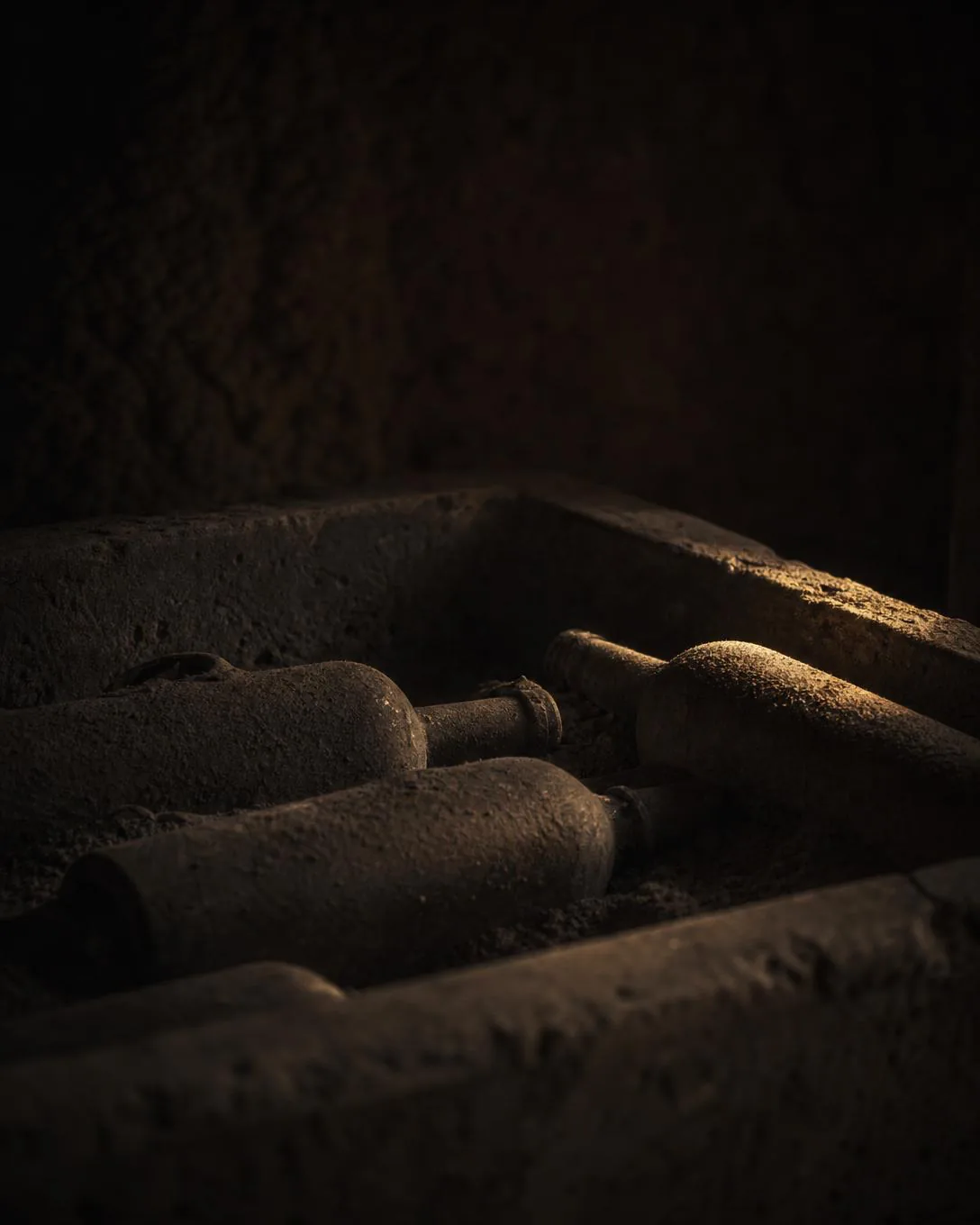
Decades of stillness · Illustration, not inventory
Négociant
A merchant house that buys grapes, must or finished wine from growers and bottles under its own name — distinct from a domaine or estate, which bottles its own production. The distinction matters for identity, not quality: some of Burgundy’s greatest bottles are négociant wines.
Grower
A producer who farms their own vineyards and bottles their own wine — in Champagne, marked récoltant-manipulant (RM) on the label. Grower bottles tie the wine to a specific farm and a specific hand, which collectors increasingly value over house blends.
Reconditioning
The practice of topping up, re-corking or re-capsuling an old bottle, sometimes performed at the producer. Legitimate when documented by the château, with certificates and often a small back label. A red flag when undocumented — because it erases precisely the evidence a buyer needs.
Seepage
Wine that has leaked past the cork, visible as staining under the capsule, on the cork top or down the label. Seepage indicates heat exposure or cork failure at some point in the bottle’s life — precisely the events good storage exists to prevent. Treat seepage as a fact requiring an explanation, never as patina.
What seepage leaves behind · Illustration, not inventory
Irreversible harm from storage above cellar temperature: pushed corks, seepage, raised ullage, cooked aromas in the glass. A bottle’s label can survive heat perfectly; its contents cannot. Storage records exist to rule this out — which is why “kept in a professional warehouse since release” is worth more than “pristine label”.
A cork pushed proud — heat's signature · Illustration, not inventory
Contamination by trichloroanisole, giving musty, damp-cardboard aromas that flatten a wine’s fruit. TCA is a bottle-level lottery unrelated to provenance — the one major fault even perfect custody cannot prevent, and the reason condition and provenance are assessed as separate questions in this cellar’s method.
Vertical
A collection or tasting of the same wine across multiple vintages. Verticals assembled from a single documented source are worth more than the sum of their bottles, because one custody chain covers the whole set — a rare thing to be able to say about ten bottles at once.
Passion asset
An asset held for both pleasure and value — wine, watches, art, classic cars. Across all of them, the same rule applies: the object’s story must be reconstructable, or the object is only worth its materials. In watches it is called box and papers; in art, provenance research; in wine, simply provenance.
CruTrade
A professional platform for trading fine wine in-bond, transferring bottles warehouse-to-warehouse under customs bond. The Empty Drops handles all releases through CruTrade, so bottles never leave professional custody between this cellar and the buyer’s storage account.
Cellar conditions
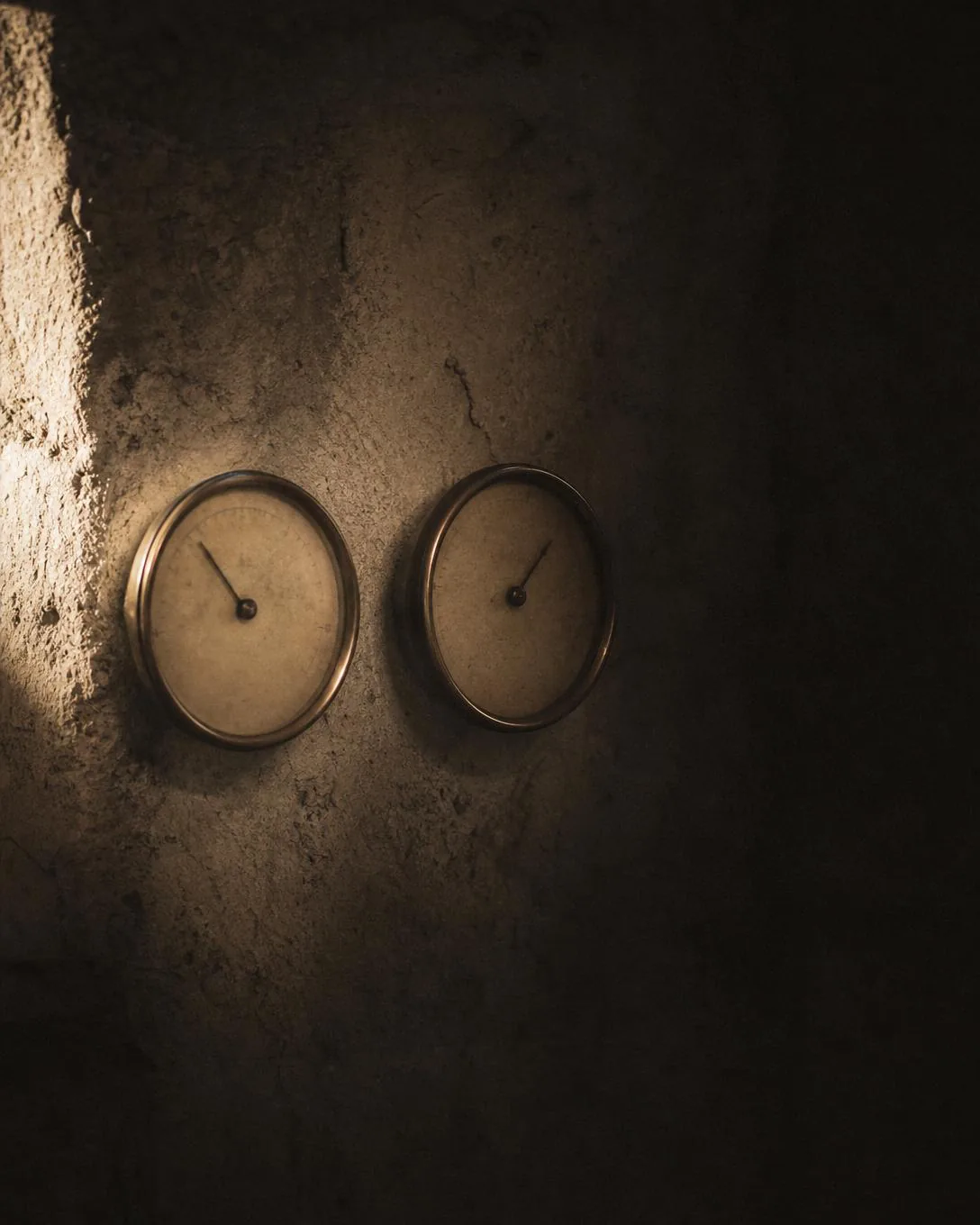
The environment wine needs to age soundly: stable temperature around 12–14°C, humidity near 70%, darkness and stillness. Professional bonded warehouses log these conditions continuously; domestic storage rarely can — which is exactly the gap that provenance documentation closes.
Temperature and humidity, watched · Illustration, not inventory
Label condition
The physical state of the label: bin-soiled, nicked, scuffed or pristine. Cosmetic for drinking, material for collecting — but never a proxy for what is in the bottle. A perfect label proves nothing about storage; a lightly stained one may still cover a perfectly kept wine.
This glossary is maintained by The Empty Drops, an independent private fine-wine cellar focused on rare bottles, provenance, custody and bonded storage. For the working method behind these terms, see the provenance guide; for the field tool, the 20-point provenance scorecard.
This site uses anonymous analytics cookies to understand how it is used. They load only if you accept. See the Cookie Policy.