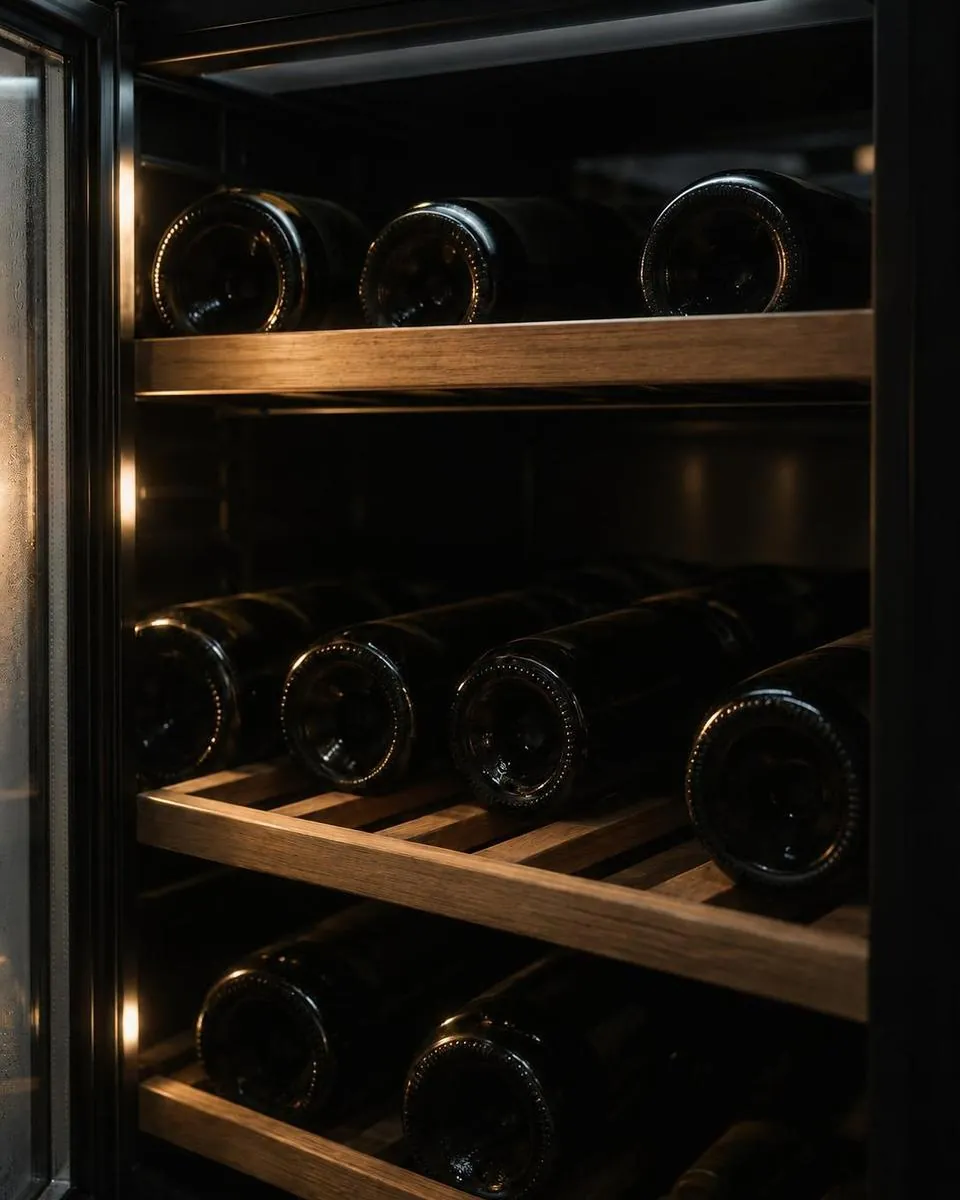
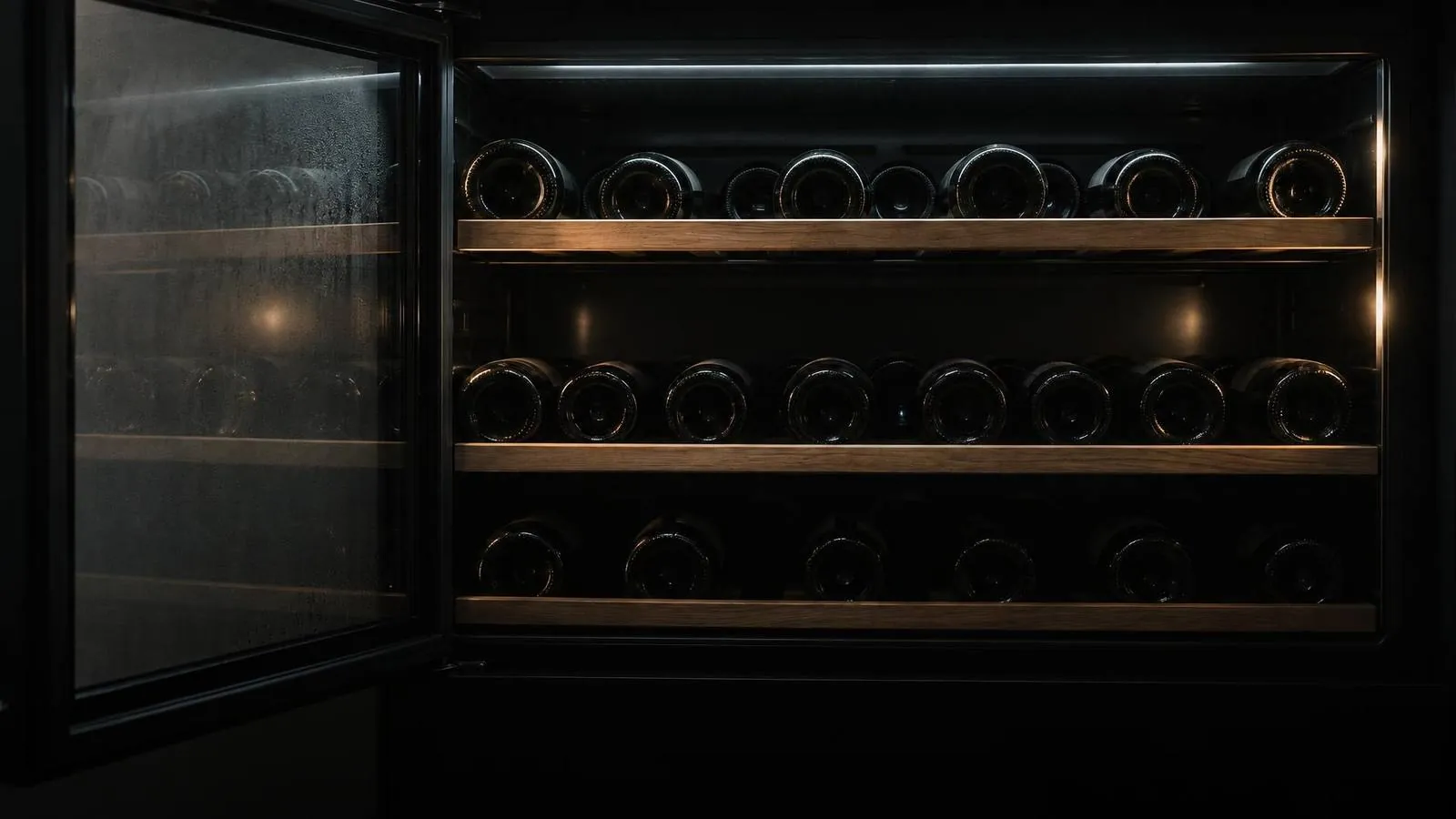
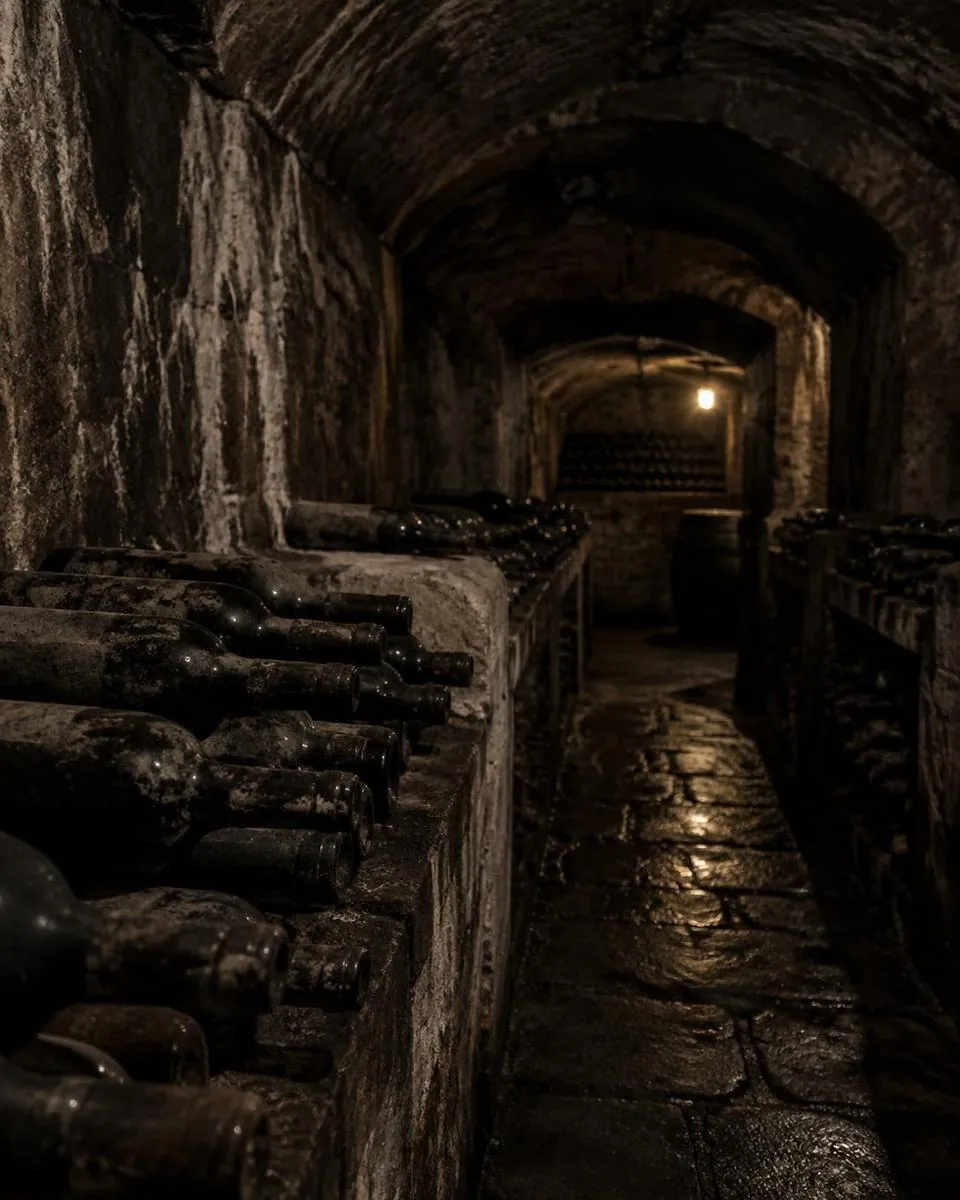
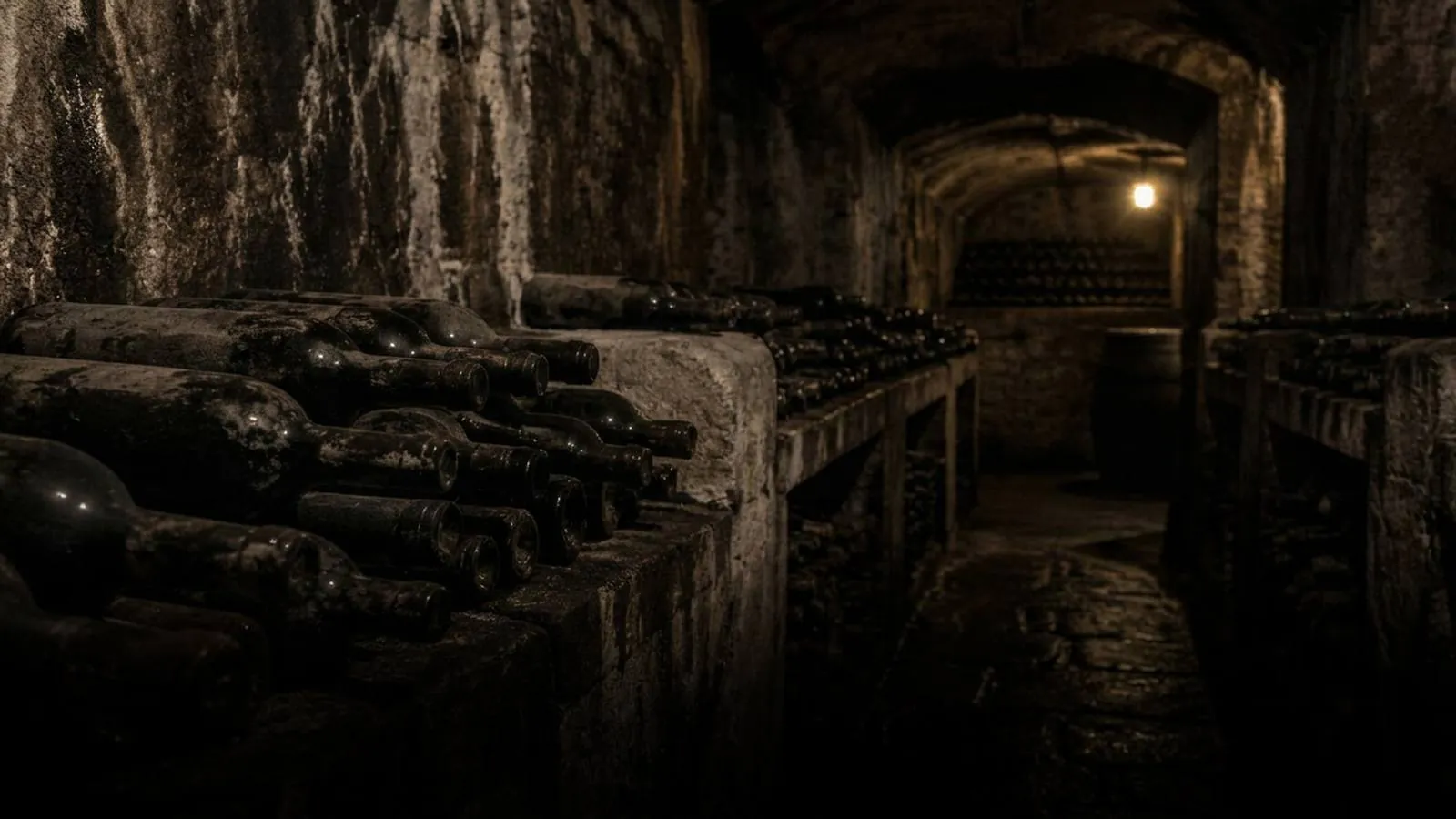
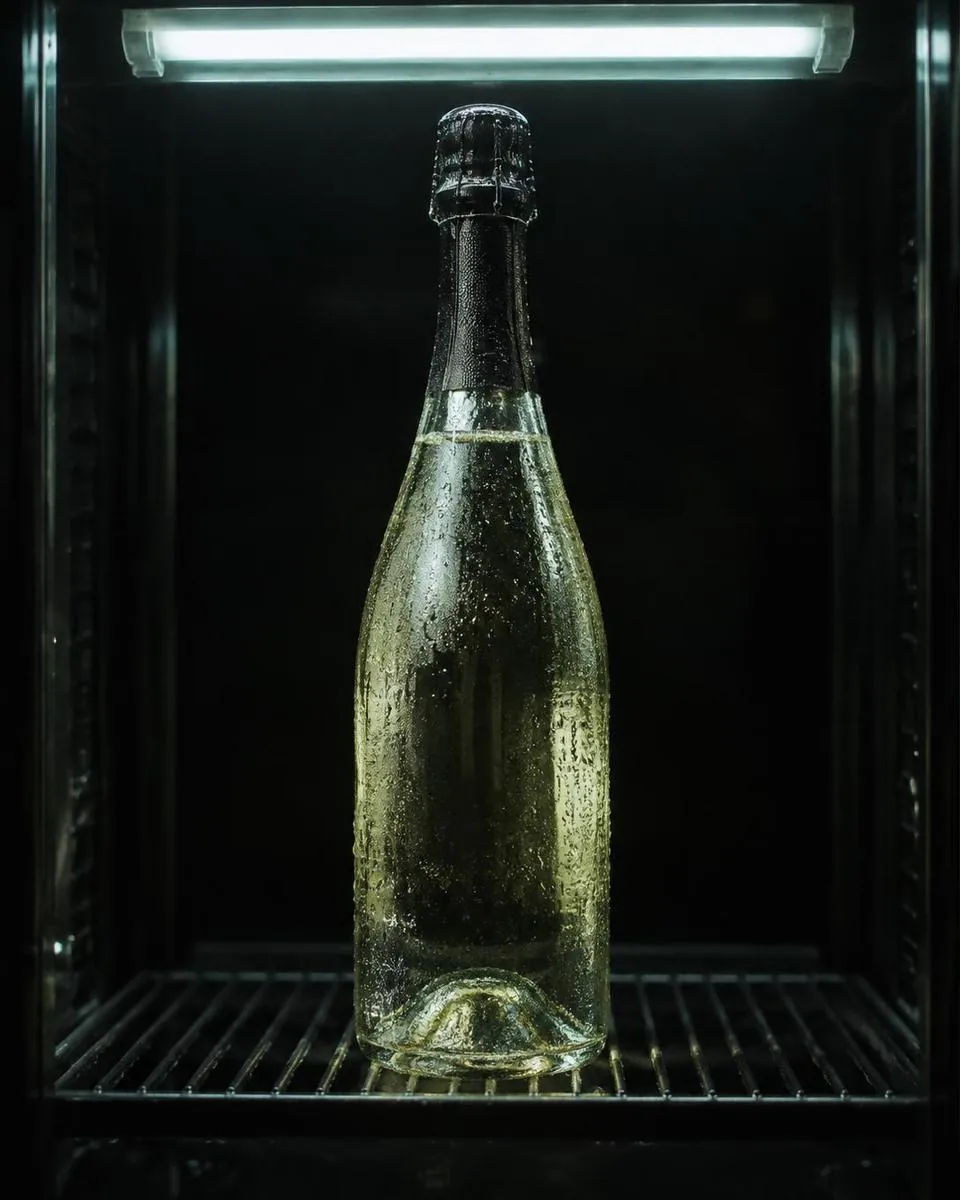
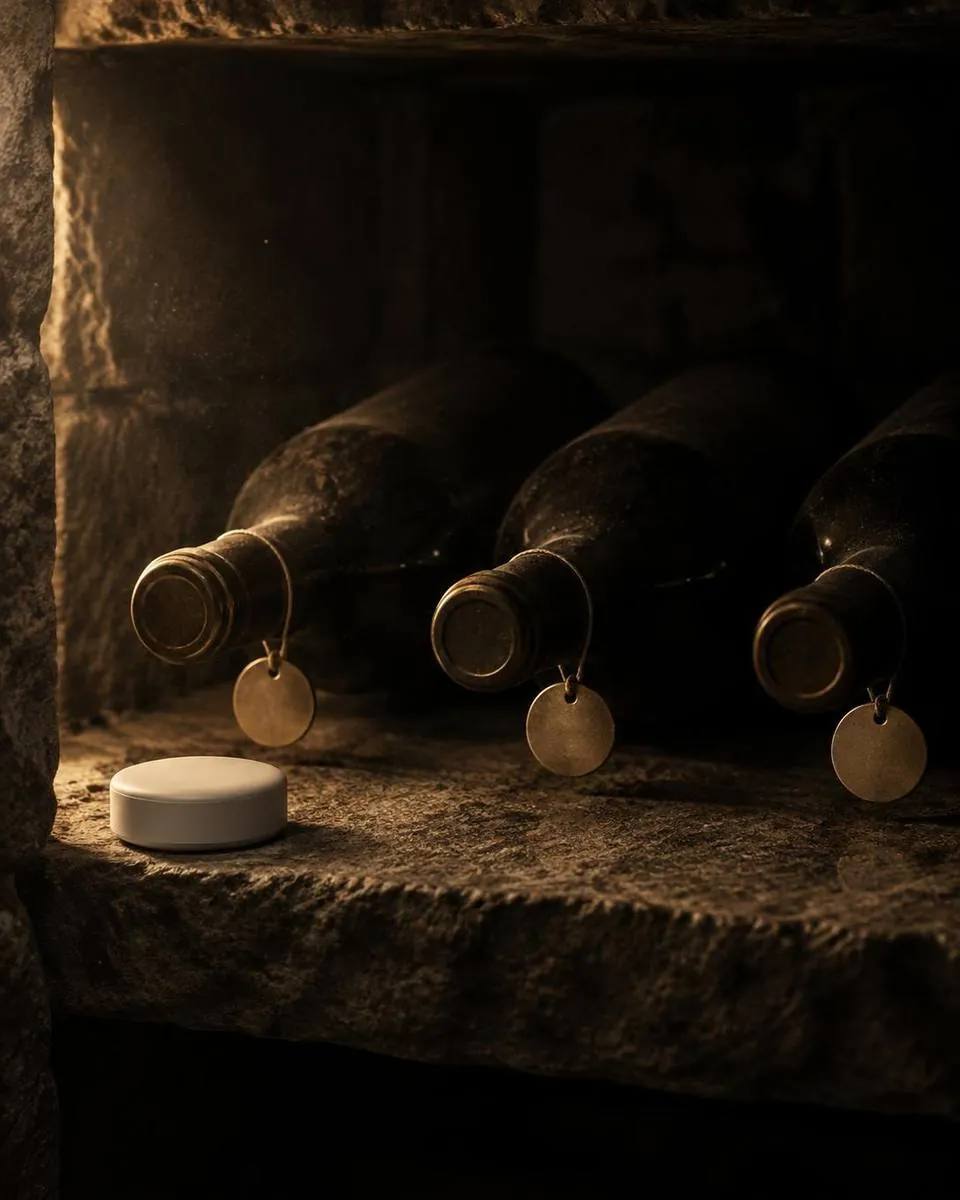
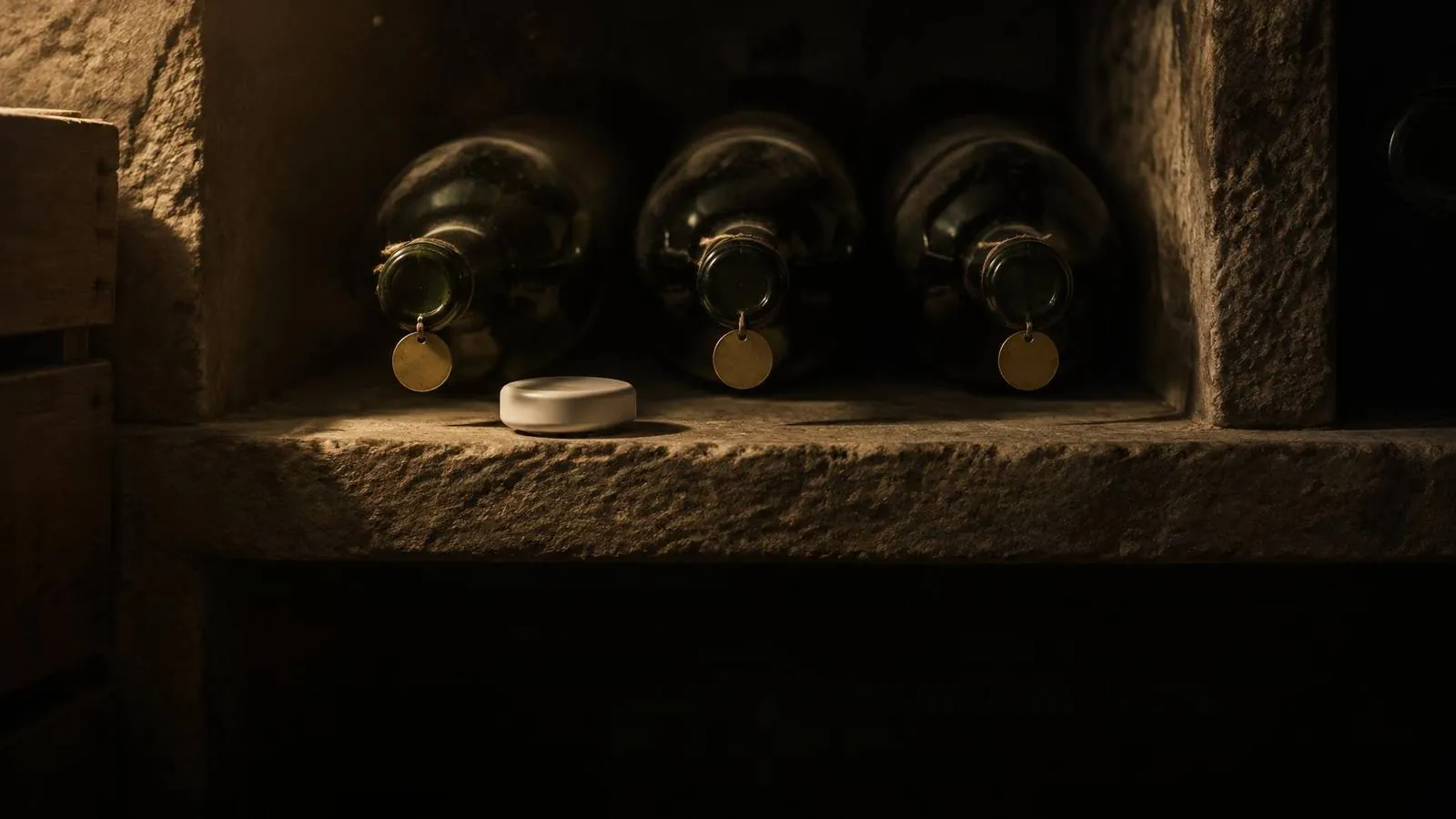
Where does it live?
Choose a place for the bottle. Then let a year pass and read the logger. The average matters more than any single day; the evidence punishes heat spikes and day-night swings.
Five places measured. What the evidence ranks: a low average, no heat spikes, no day-night swings. Seal one of six. Go to the light →
Three hours.
Riboflavin in wine is photoactivated at around 370 and 440 nm, and the second peak sits in visible blue. Choose the glass, switch on the light, and count.
Three glasses counted. The rule is darkness by default. Seal two of six.
Inside the bottle.
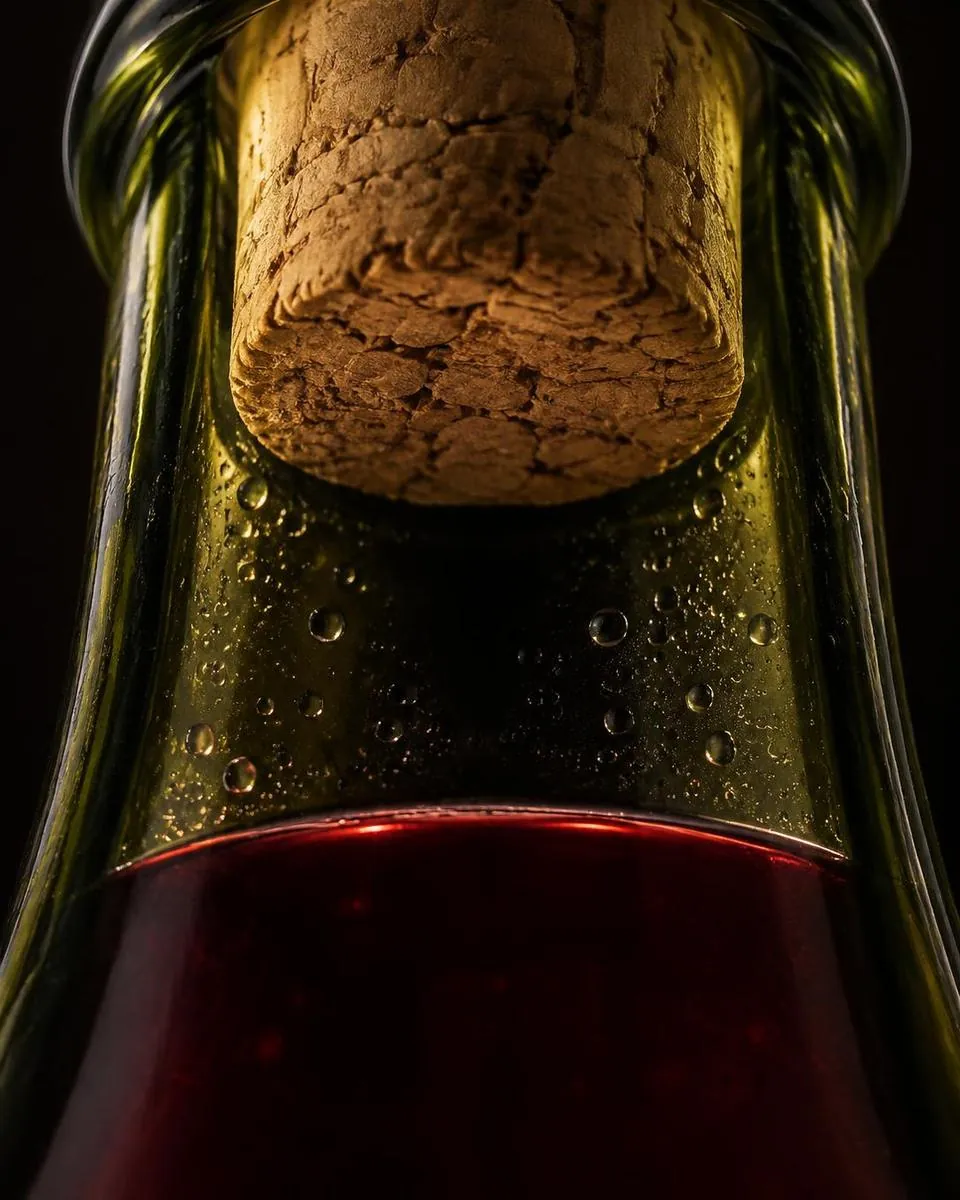
The two have been welded together for a century — keep it humid so the cork stays moist, which is why the bottle lies down — and the weld does not hold. Turn the bottle. Move the room.
Turned both ways, room swept from dry to damp. Humidity, separated from orientation. Seal three of six.
What shares the air.
The compounds behind cork taint — chloroanisoles and their brominated cousin — are made by moulds from halophenols found in treated timber, pallets, paints, flame retardants and chlorinated cleaning products. Take out of the room what should not be in it.
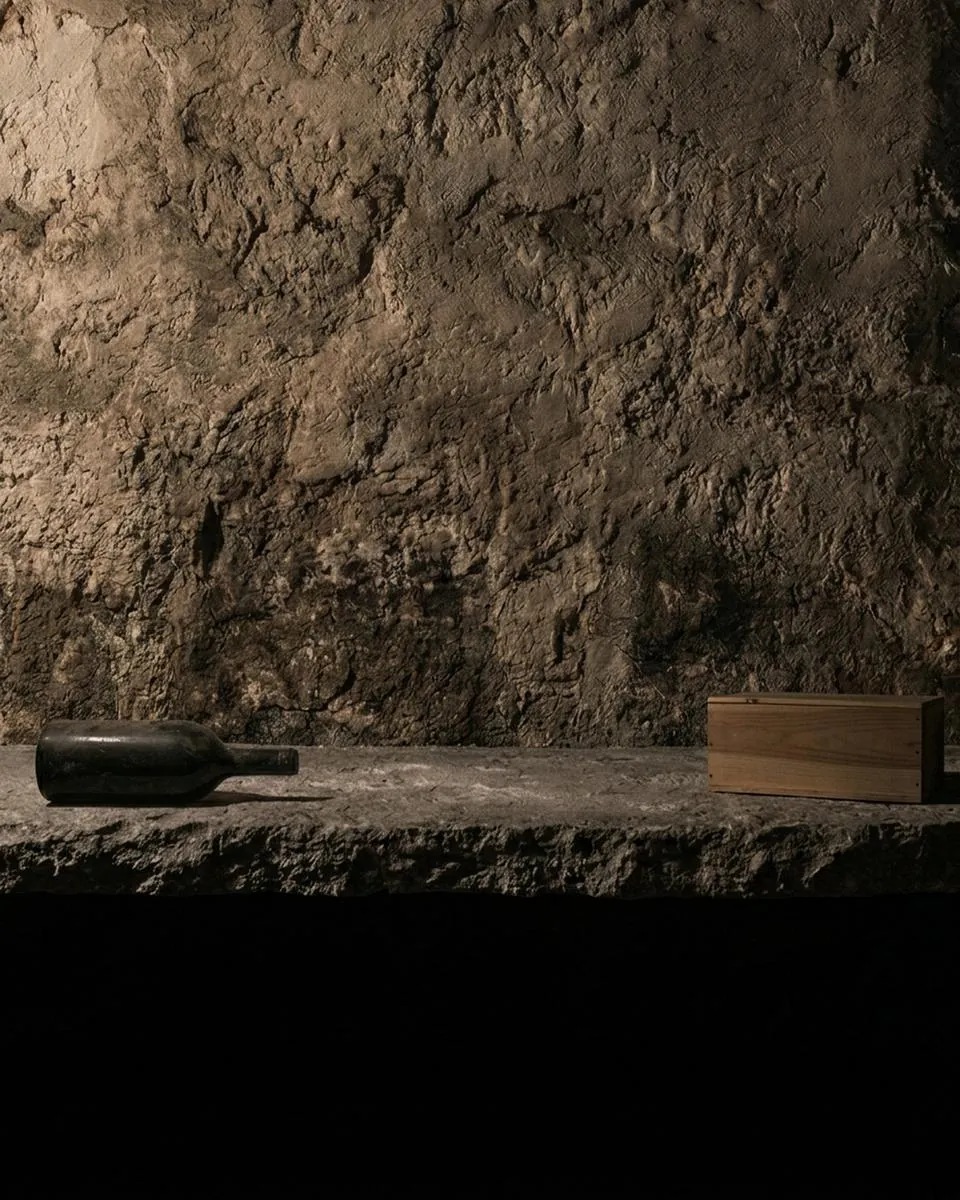
Tap an object to take it out of the room. Each one is a route to the cork.
The room is clean and the horizon is known. The practical rule costs nothing. Seal four of six.
Ask three questions.
The word bonded is a tax status, and the published approval requirements are about security and record-keeping, not climate. You get three questions for the warehouse. Choose them.
Three questions, three answers from the record. The warehouse worth paying for is the one that keeps a record you could defend. Seal five of six.
The logger.
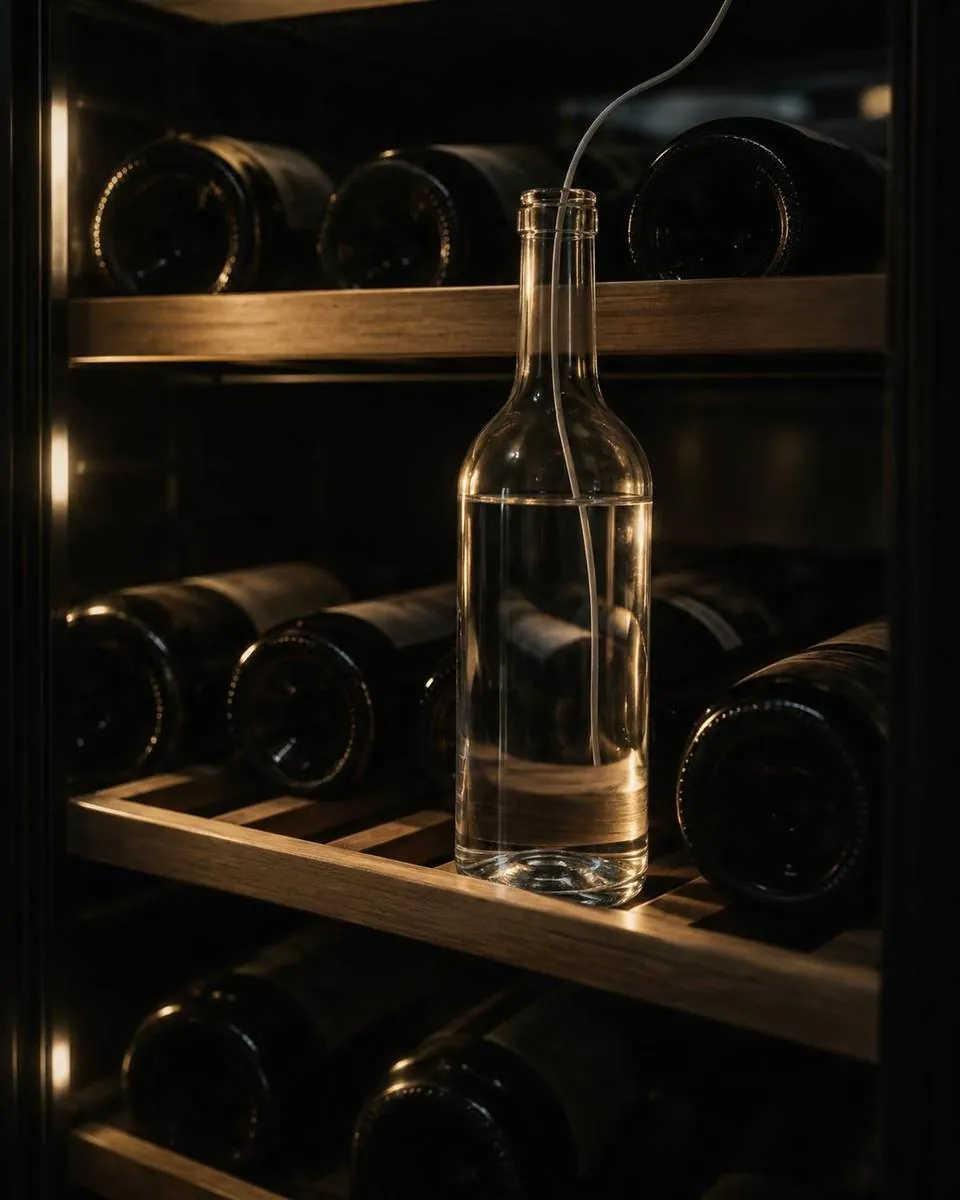
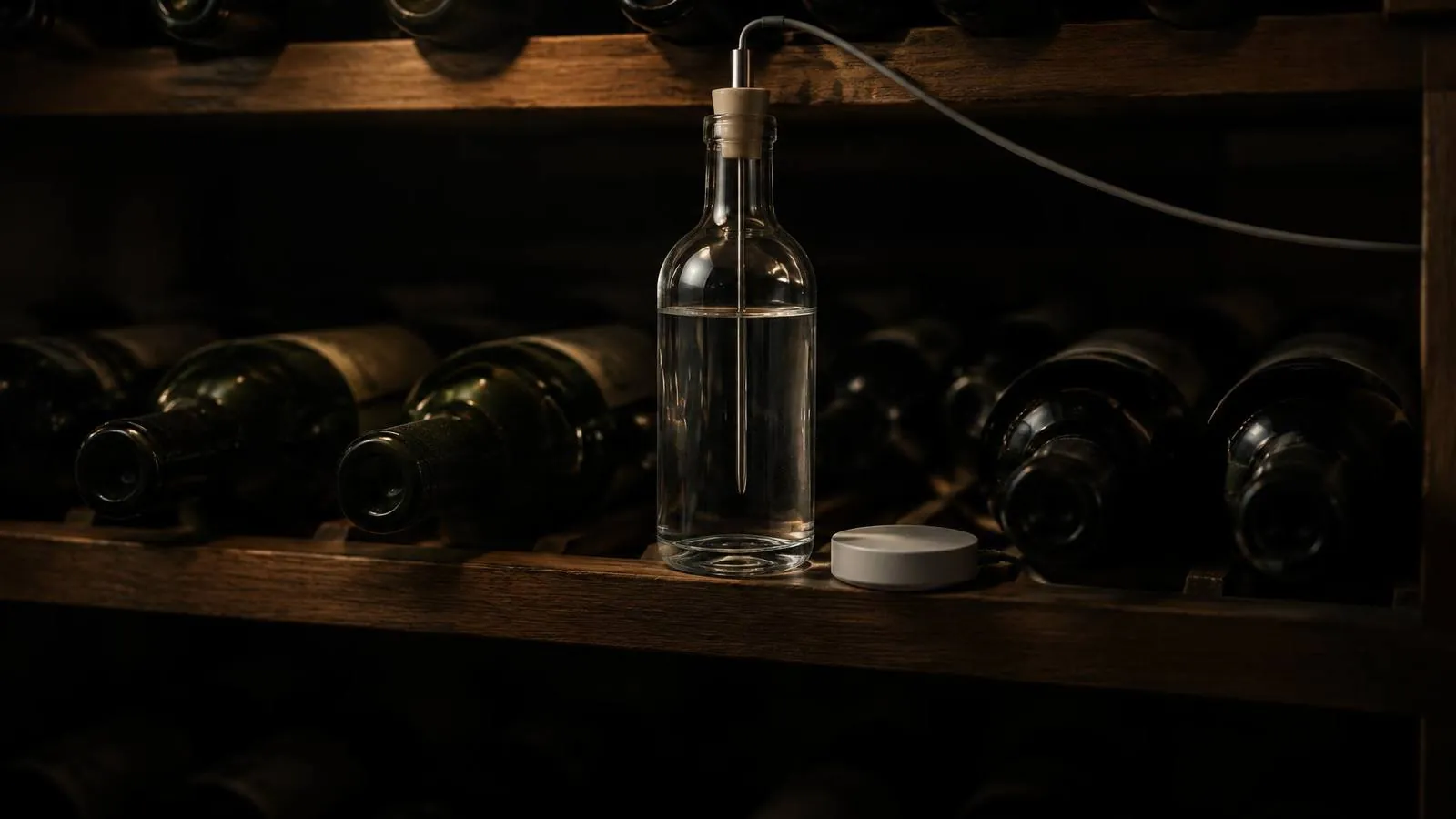
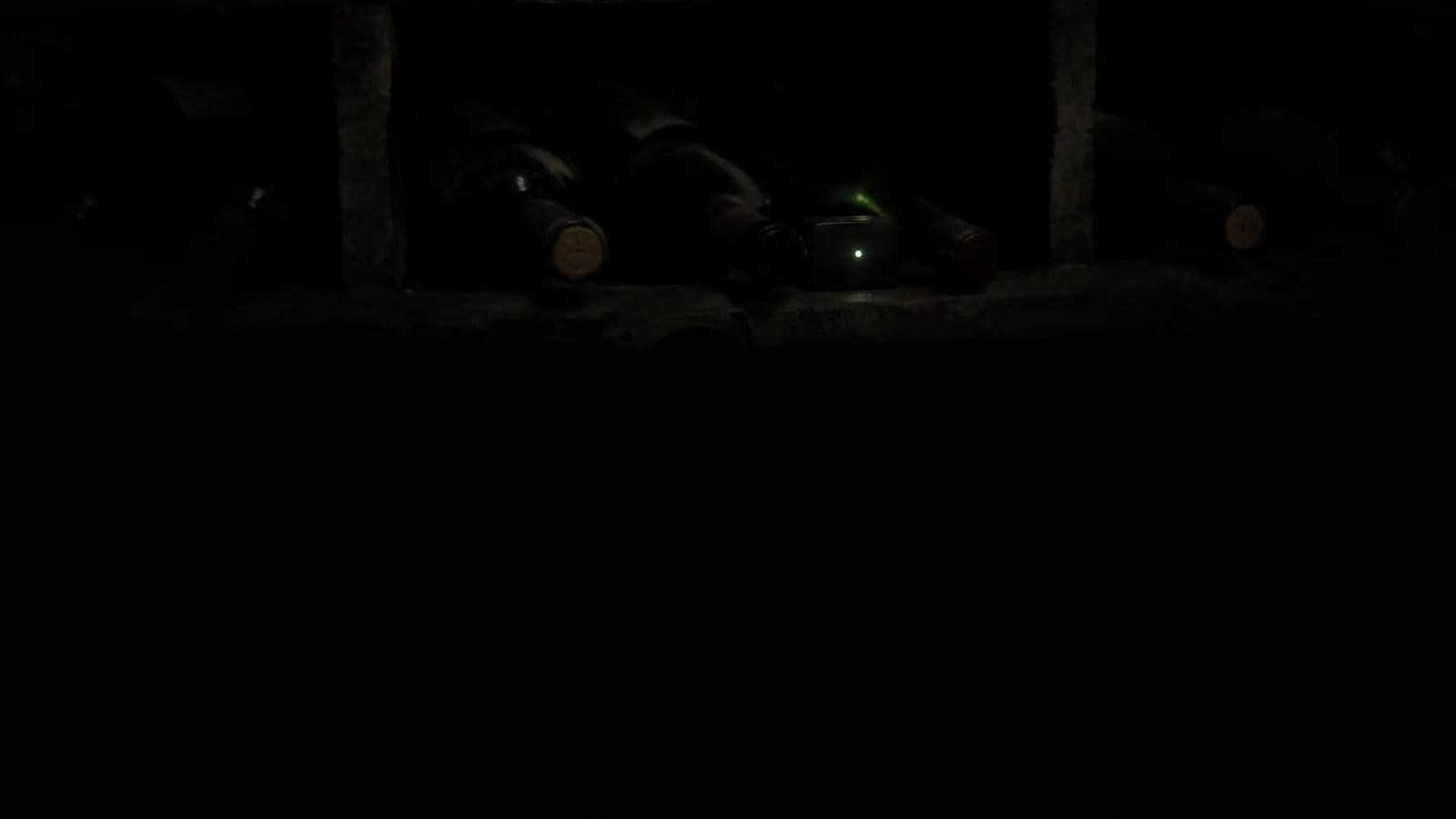
Before trusting any space with wine you care about, log it for a full year. Place the sensor, keep witness bottles, and read what your cellar can prove.
Probe in the bottle, witnesses on the shelf. The daily figure is the one the evidence punishes. Seal six of six.
A rare bottle without custody is just a story. A cellar without a logger is a story about a cellar.