Reading the bottle.
A bottle can speak before it is opened. Its cork, capsule, level, colour and paper do not reveal everything — and they do not prove a history. But they can reveal risk. Visual inspection does not taste the wine. It reads the risk. And one distinction governs everything that follows: some marks are wounds, and some marks are provenance. This is not a guide to panic. It is a guide to attention.
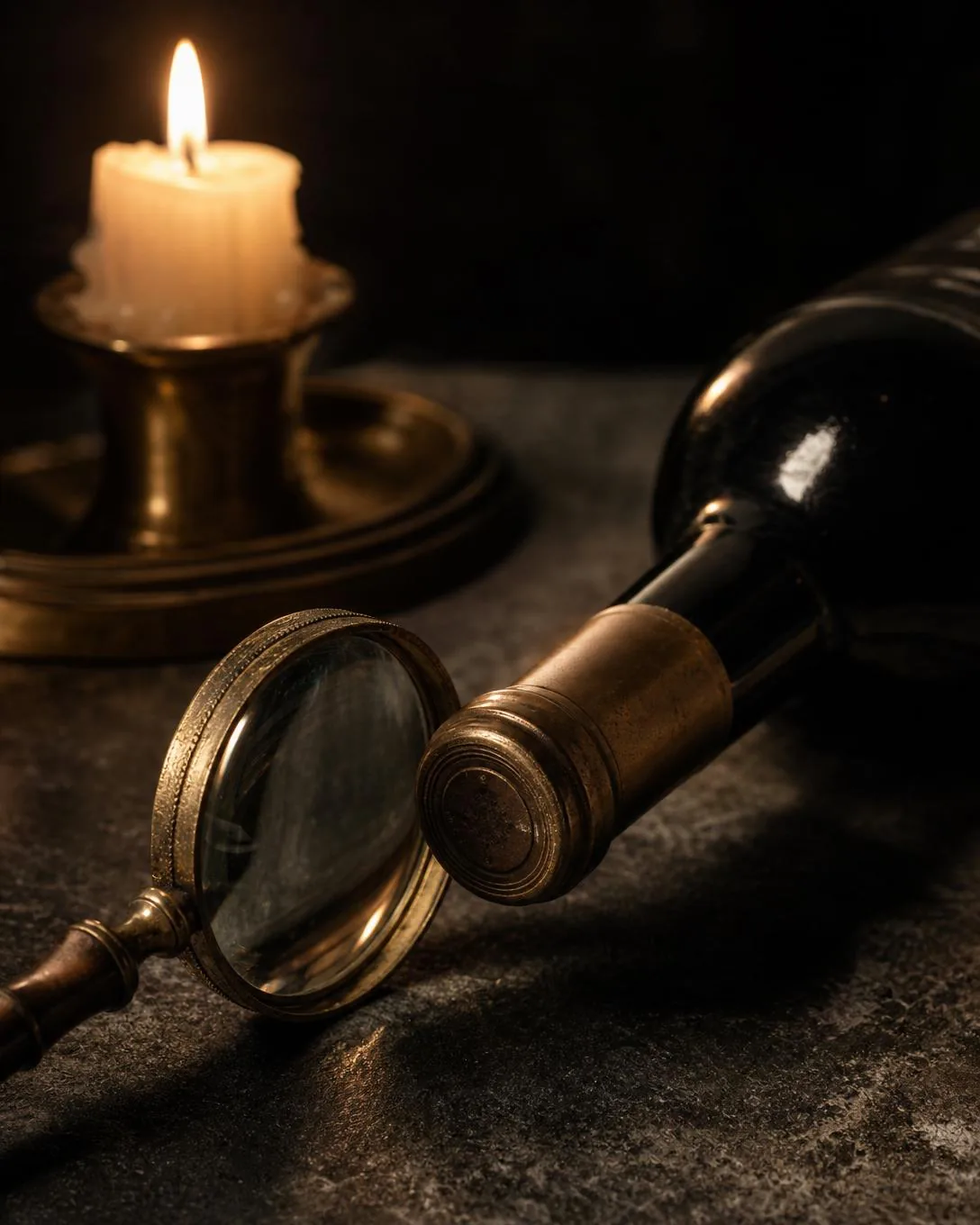
Zone one — The closure
Every serious inspection starts at the top. The cork and its capsule are the bottle's only moving parts — the seal on which everything below depends — and they are where heat, pressure and time leave their first testimony. Auction houses and fine-wine platforms often compress this zone into a private shorthand — signs of seepage, raised or depressed corks, corroded capsules — with codes that vary from house to house. This chapter spells the language out.
Protruding cork
What you seeA cork standing proud of the glass lip, sometimes only a millimetre or two; under an intact capsule, a top that looks domed or lifted rather than flat. In auction shorthand: PC or SPC.
What it may meanWine expands with heat. Sustained heat — above roughly ninety degrees Fahrenheit, the low thirties Celsius — can build enough pressure inside the bottle to drive the cork upward — one of the clearest visible warnings heat can leave. Freezing does the same thing from the other direction: water expands as ice, with the same result. Either way, the seal has been worked by forces it was never meant to hold, and it often travels with a second witness, seepage.
What it does not proveA slightly eased cork on a bottle of great age can be the ordinary softening of decades, and buyers of old wine tolerate it in an otherwise coherent bottle. It does not, by itself, prove the wine is damaged — heat harms wine invisibly long before it moves a cork, and some cooked bottles look perfect.
The reading: the bottle has been somewhere it should never have been. Ask where — and ask what else agrees.
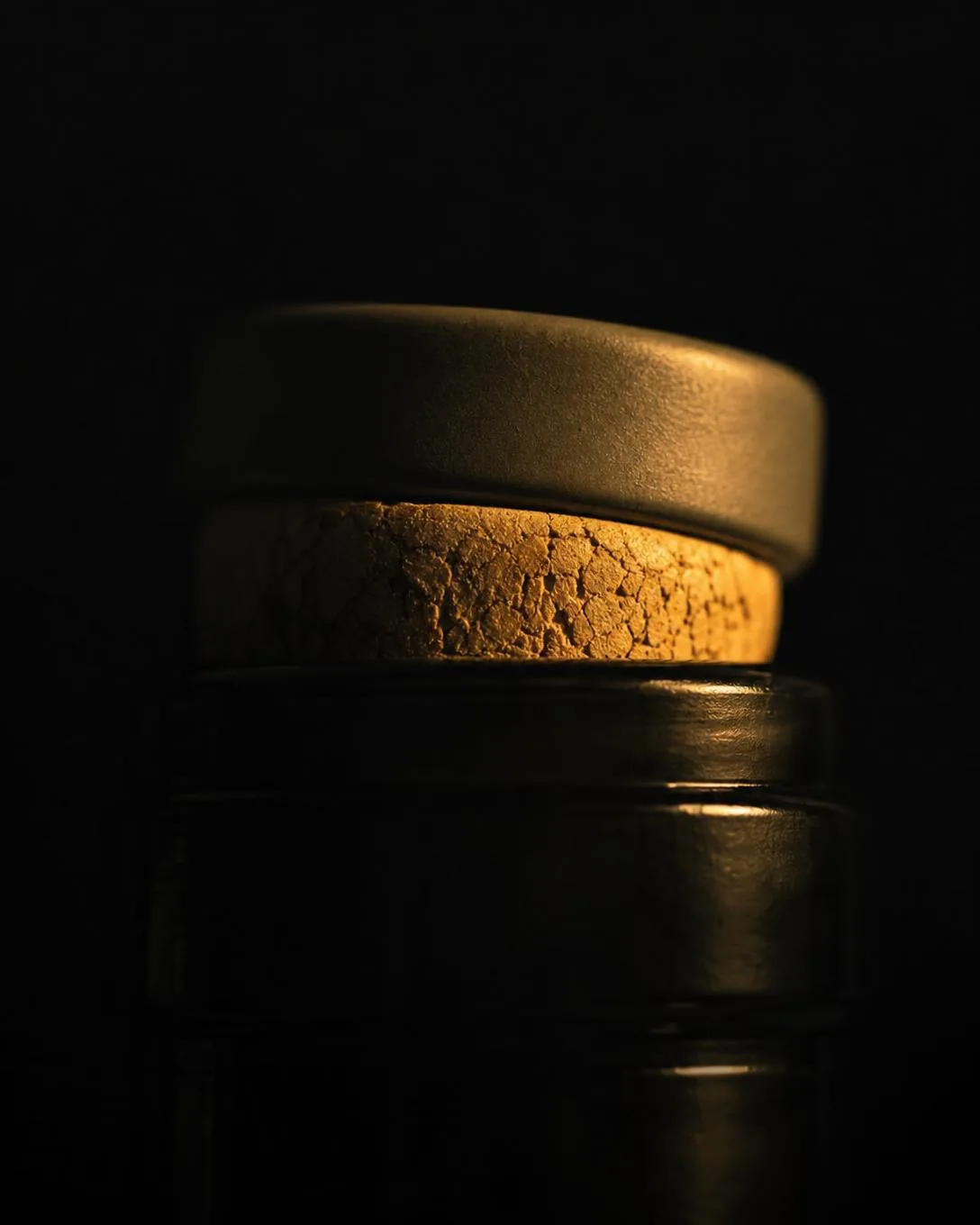
Depressed cork
What you seeThe opposite silhouette: a cork sitting visibly below the rim, a shallow well of shadow inside the neck; under capsule, a top that dips instead of doming. In the catalogues: DC or SDC.
What it may meanCorks lose elasticity as they dry and age; a cork can also be driven low at bottling, or settle after decades of easing. The concern is not the position but the tension: a cork that has slackened may no longer press against the glass with the force a seal requires, and oxygen is patient. What tells is the pattern around it: the bottle's age, the fill level, the state of the capsule — read together, not the cork alone.
What it does not proveA slightly depressed cork in an older bottle is common and widely tolerated; many collectors treat it as cosmetic when the fill is healthy and the capsule clean. It proves nothing alone. Deep depression in a young bottle is a different conversation.
The reading: position is a question; tension is the answer. Read it with the fill level, never without.
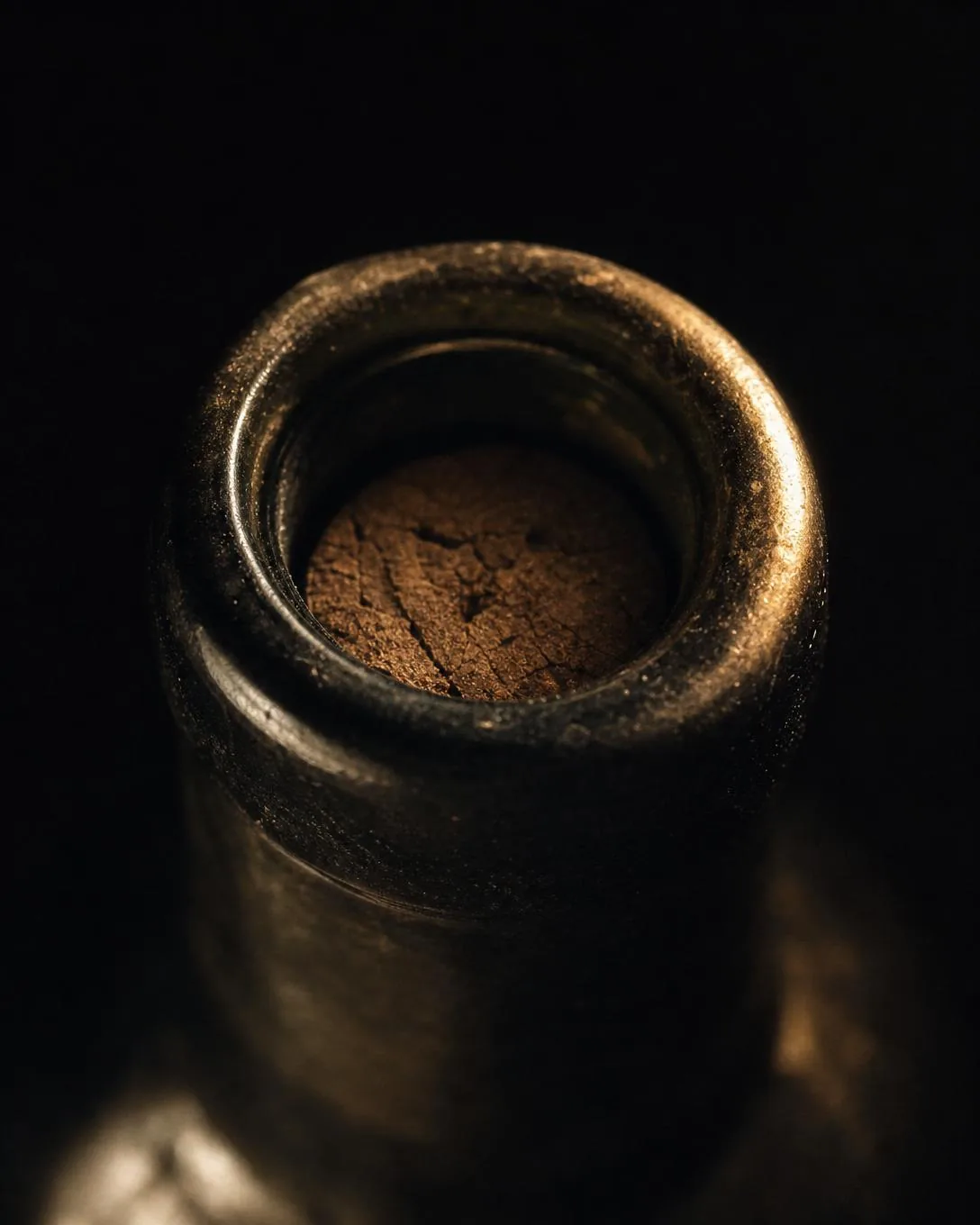
Seepage
What you seeDried rivulets of wine at the base of the capsule; a crusted, sticky residue that hardens where it met the air; a capsule stuck fast to the glass that will not turn; sometimes a stain on the label aligned exactly with the trace above it. The most consequential letters in the auction code: SOS.
What it may meanWine has escaped past the cork. Heat is a frequent author — expansion forcing wine through the seal — but corks can fail without heat, from age or defect. The geometry tells the story: a trace descending from the closure belongs to this bottle; a splash from the side may belong to a broken neighbour. Fresh, active seepage is the loudest alarm a closed bottle can raise.
What it does not proveSlight, long-dried seepage on a bottle of great age is common enough that experienced buyers weigh it rather than flee it — against fill, colour and the rest of the bottle's coherence. It does not prove the wine is ruined. On a young bottle, it comes very close.
The reading: wine where no wine should be. The seal has already lost once; assume it can lose again.
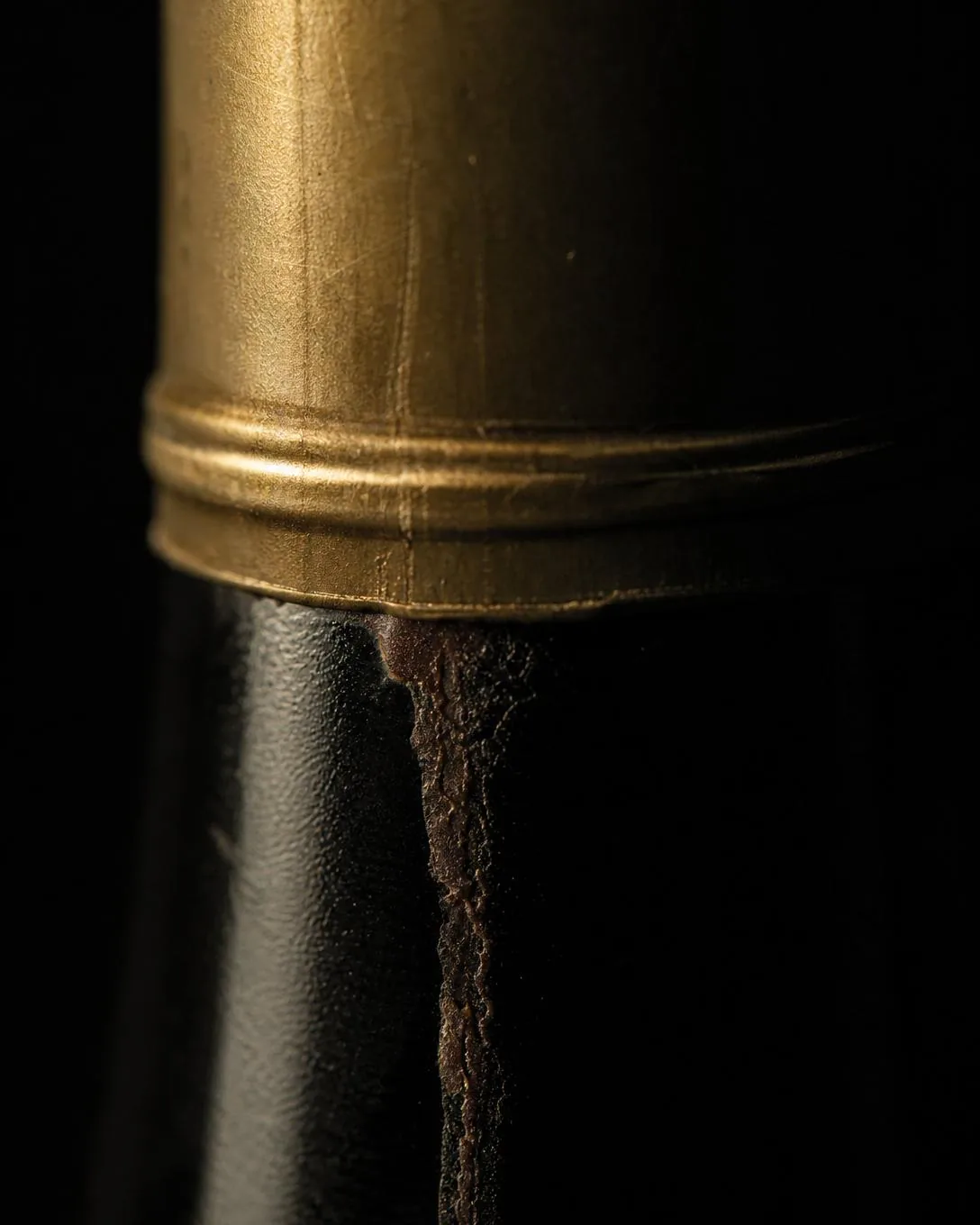
Corroded capsule
What you seeThe tin gone dull and mottled; a bloom of pale oxidation across the metal, heaviest at the folds and the lower rim. CC, in the catalogues — and on old bottles, one of their most frequent notes.
What it may meanMost often: humidity — decades of it. Usually that means a cellar doing its job, though damp alone is not proof of good keeping. The sixty to seventy-five per cent moisture that keeps corks supple is precisely what weathers tin over the decades, and collectors of old wine expect a degree of corrosion on a bottle that has been kept well. Read alone, it is patina — the cellar signing its work. Read together with seepage residue at the capsule's base, it changes meaning: moisture from inside, not outside.
What it does not proveCorrosion proves nothing about the wine, in either direction. And its absence proves nothing either — though a capsule too pristine for a bottle's claimed age raises a different kind of question, one that belongs to identity rather than condition.
The reading: corrosion is weather, not wound — until it travels with wine. Then read the whole closure again.
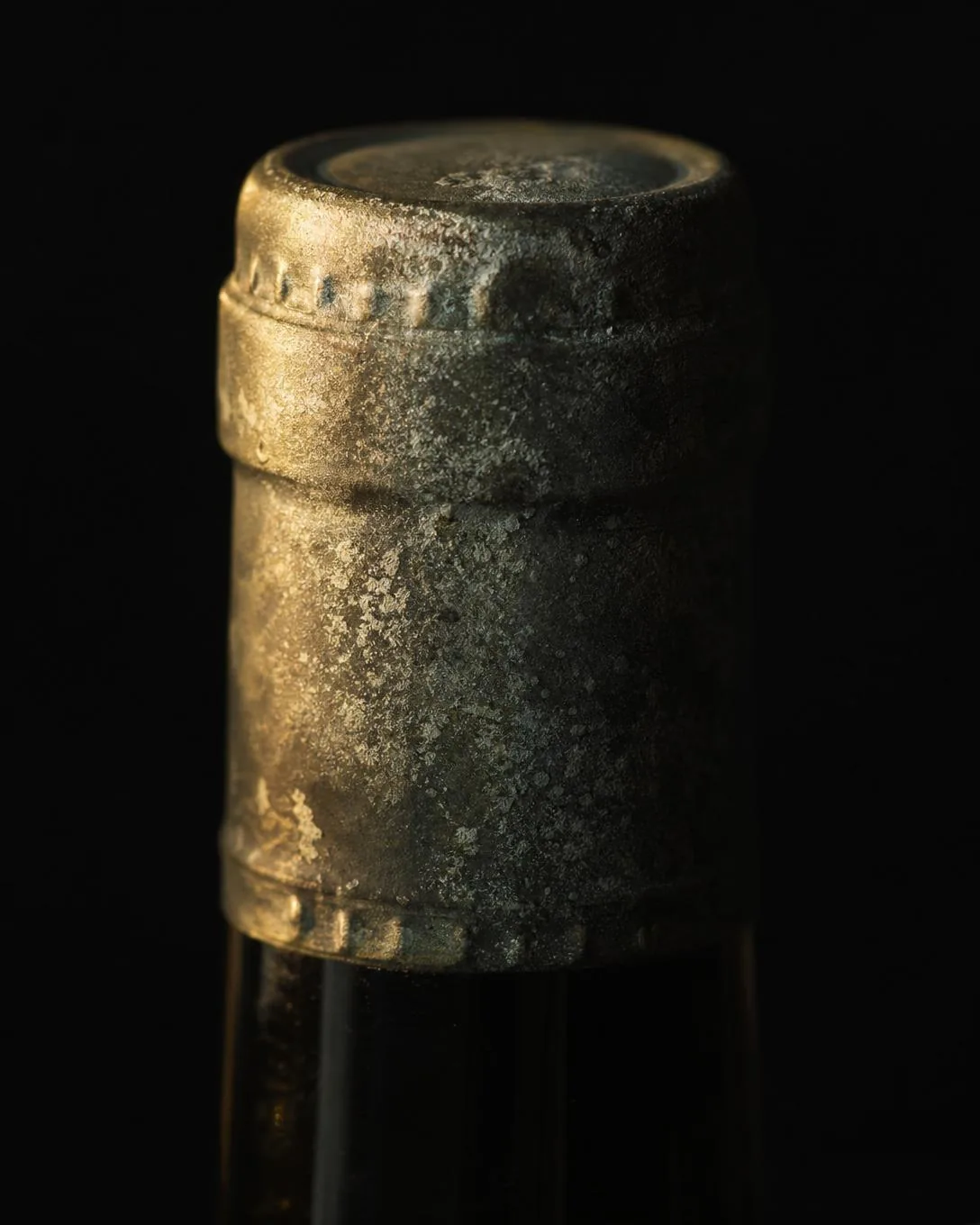
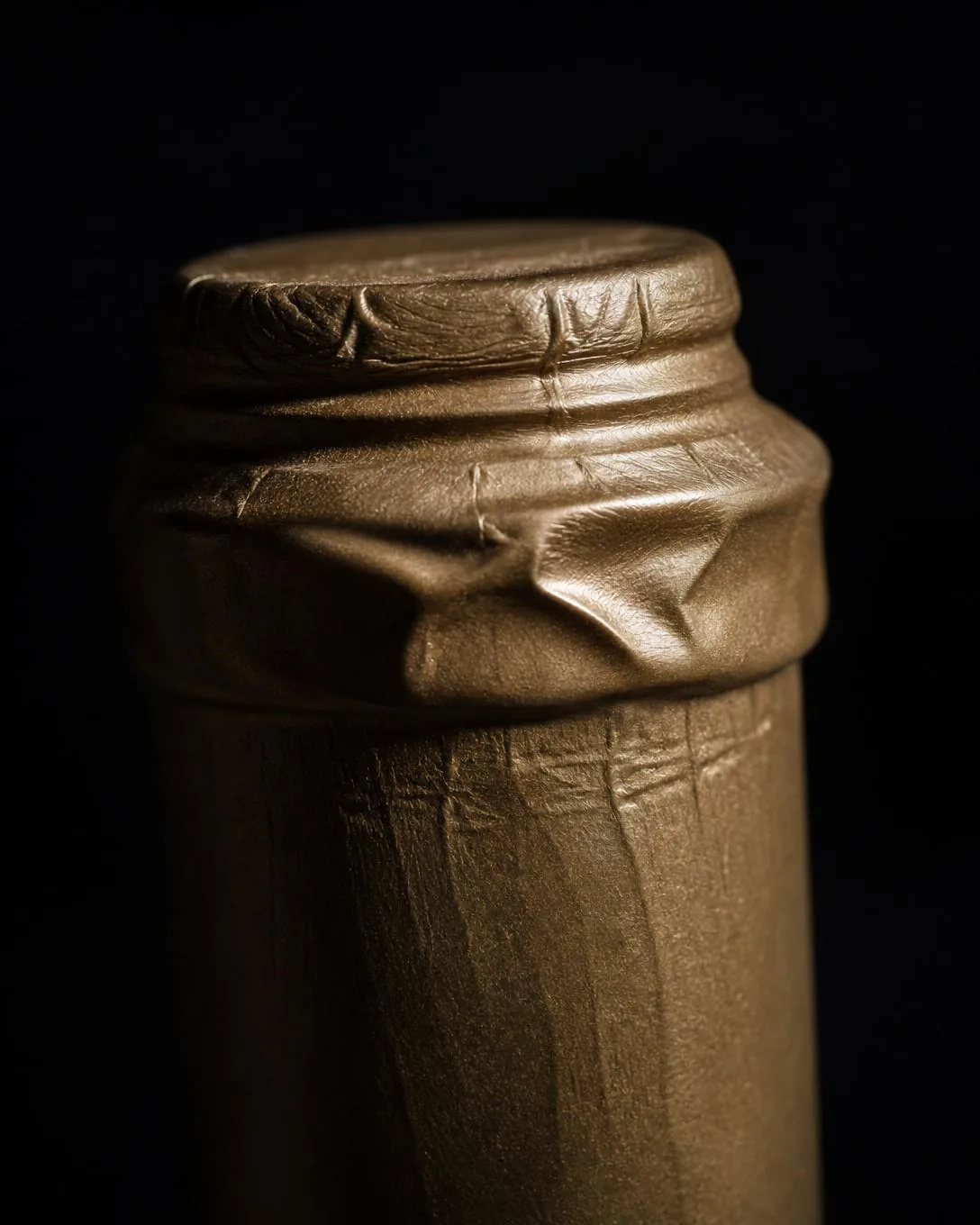
Wrinkled, cut or damaged capsule
What you seeFine wrinkles and buckles in the tin, as if the metal had flinched; tears, nicks, missing pieces; or a clean horizontal cut low on the capsule. A capsule that spins freely on the neck; or one glued immovably to the glass.
What it may meanEach mark has its own author. Wrinkling and buckling correlate with heat — the closure swelling and settling beneath the tin. A loose, spinning capsule is usually nothing: adhesives dry out. A stuck capsule deserves attention: dried wine is one of the things that glue tin to glass. And a deliberate clean cut at the base is frequently the opposite of damage: the documented trace of an inspection, made to examine the cork and branded glass beneath — provenance work, visible.
What it does not proveThe capsule is jewellery over the seal, not the seal itself. Cosmetic damage to it — nicks, tears, scuffs — says nothing about the wine if the cork and fill beneath are sound.
The reading: the capsule cannot hurt the wine, but it keeps the wine's diary. Learn which entries matter.
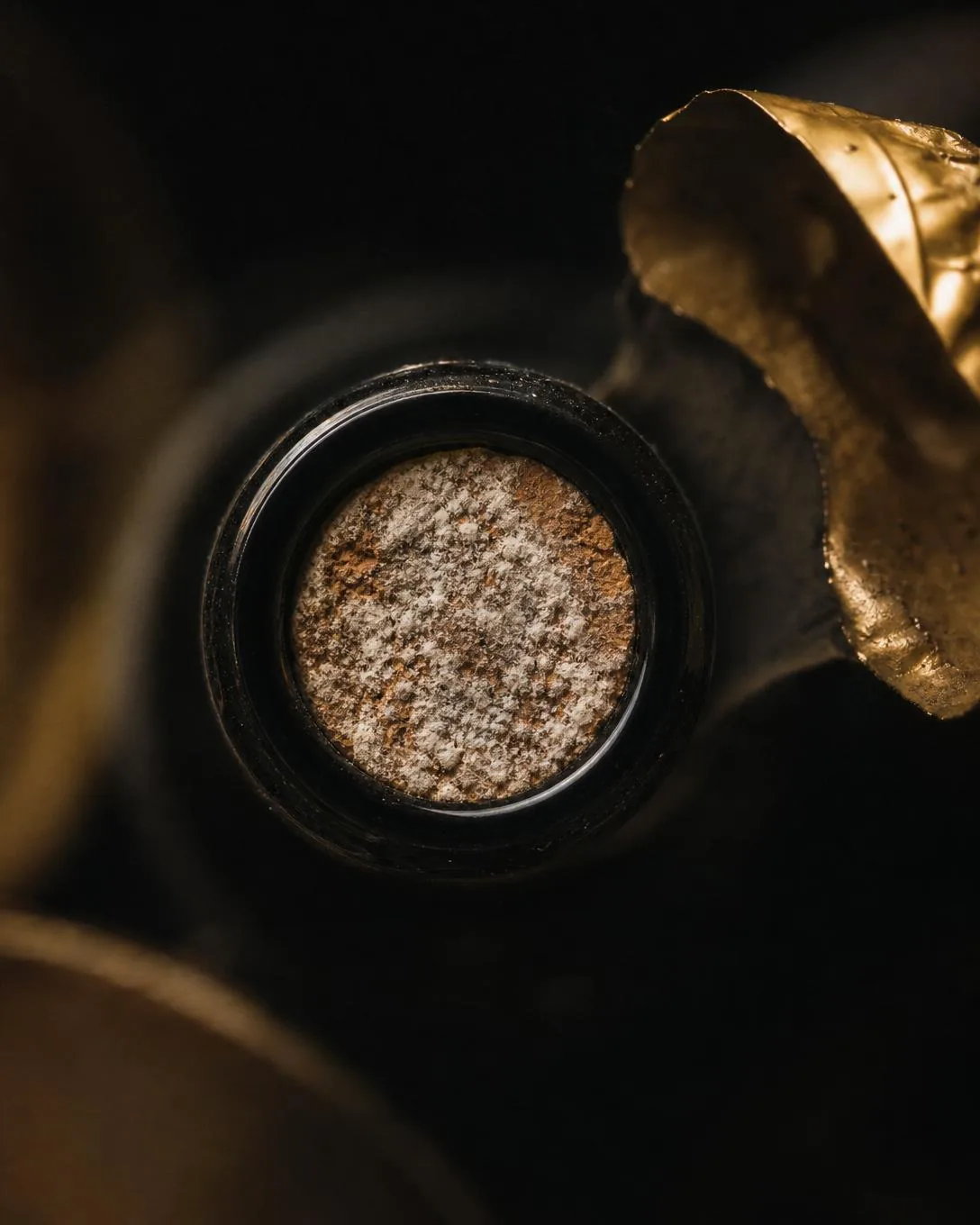
Mould on the cork
What you seeBeneath a lifted capsule, a thin dry veil of pale mould across the cork's top; sometimes a soft grey dusting on the glass or the capsule itself, the bloom of a humid room.
What it may meanAlmost always: the cellar, doing its job. The humidity that keeps a cork supple for decades will, in time, grow a harmless surface bloom on everything it touches. It sits on top of the closure and never meets the wine. Bottles emerging from long, humid cellaring often wear it. The distinction that matters is texture: a dry, dusty veil is cellar signature; a dark, sticky, crusted deposit is not mould at all but seepage residue — and that belongs to a different entry.
What it does not proveSurface mould proves humidity, nothing more. It is not corked wine — TCA is chemistry, not a visible growth — and cleaning it away for presentation removes evidence of keeping, not a defect.
The reading: mould is the cellar's signature, not the wine's confession. Read the texture before the colour.
Zone two — The level
Gravity keeps the record here. The space between cork and wine — the ullage — grows slowly by nature and quickly by neglect, and the glass remembers where the wine has stood.
Ullage against age
What you seeWhere the wine stands against the glass. Bordeaux shoulders are read by position — into neck, base neck, top shoulder, mid shoulder, low shoulder. Burgundy's slope defeats those words, so its ullage is measured in centimetres from the base of the cork; Champagne, in centimetres below the foil.
What it may meanCorks breathe, and a bottle loses a little of itself each decade. The standard the trade still uses — drawn up by Michael Broadbent at Christie's in the late 1980s — prices that patience: base neck is excellent at any age; top shoulder is normal for a claret of fifteen years or more; mid shoulder is not abnormal at thirty or forty, though never desirable; low shoulder is accepted only when the bottle itself is the rarity. Burgundy's clock runs slower against the glass: two centimetres is excellent at any age, and Christie's calls up to seven relatively normal in a thirty-year-old bottle. The alarm is never the level alone — it is the level against the age. A shoulder fill in a young wine means the seal, or the storage, has been losing.
Producers fill differently — some houses famously high — and corks vary from the day of bottling, which is why single-bottle judgements mislead and cases are read for consistency: twelve level shoulders tell one story; one odd bottle among eleven full ones tells another. And humble fills have humbled tasters forever — the auction world keeps its anecdotes of glorious mid-shoulder wines. Level is an arrow in the quiver, not the verdict.
The reading: never ask where the wine stands. Ask where it stands for its age — and what the rest of the case says.

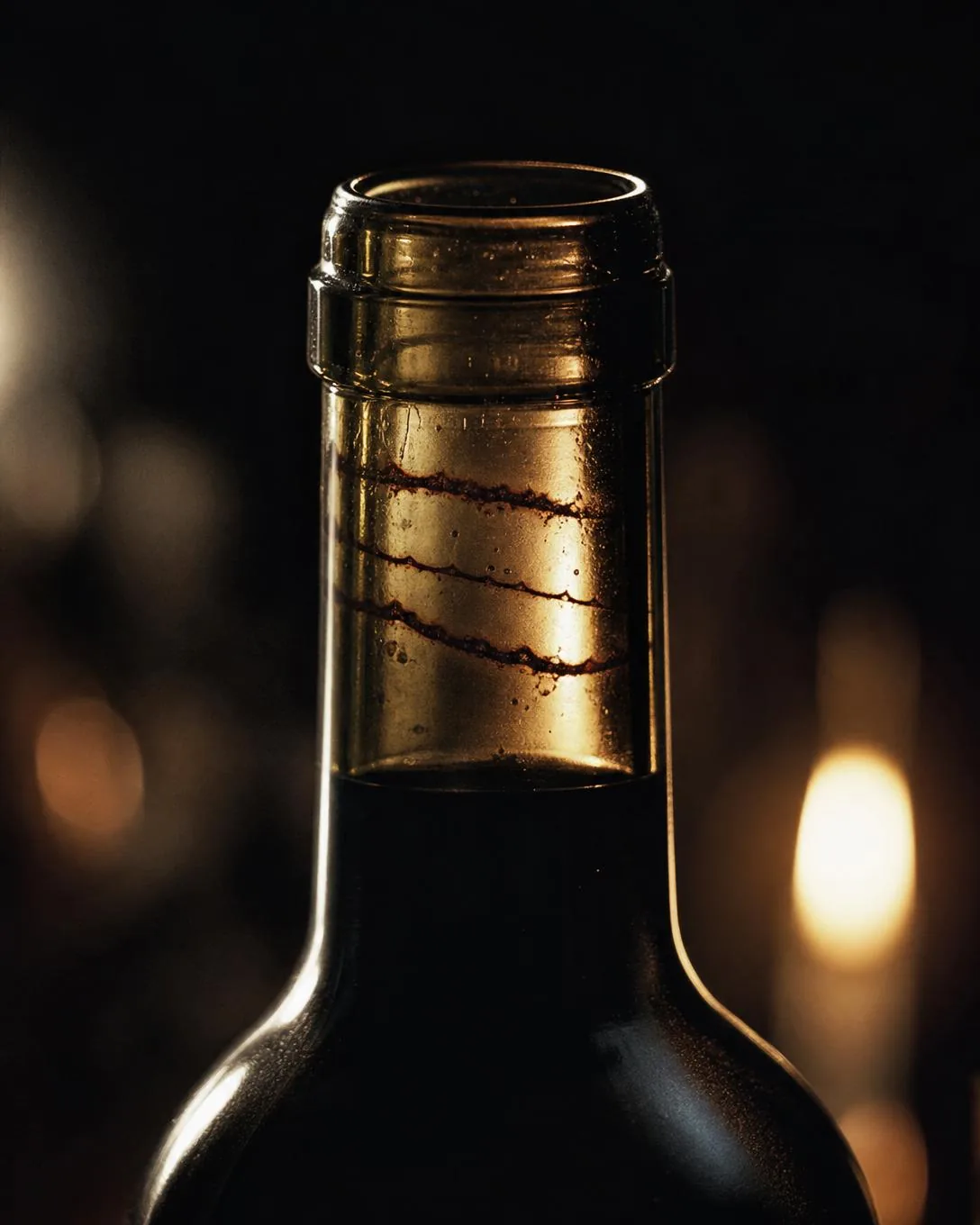
Tide marks
What you seeFaint dried rings or a film inside the glass above the present fill — pale watermarks on the inner neck, visible against a light, where wine once stood and no longer does.
What it may meanWine has been higher against that glass than it is now. Heat expands wine up the neck and lets it fall back, leaving its line; a journey in a warm van does the same; so does time spent weeping past a tired cork before the level settled lower. The marks are the glass's memory of movement the label never mentions.
What it does not proveA bottle that has spent decades on its side has bathed its whole inner surface; stood upright for a photograph, it may show honest ghosts of that long rest rather than of any crisis. Tide marks are a question addressed to the closure — read them with the cork, the capsule and the level, never alone.
The reading: the glass remembers where the wine has been. Ask it when — and check the closure for the answer.
Zone three — The wine, through the glass
The glass is a lens as well as a wall. Held against a light, a bottle will show the colour of its evolution, the clarity of its keeping and the sediment of its age — three readings, no corkscrew.
Colour, against the light
What you seeWith a strong light behind the bottle — through the punt is the old trick — the wine's robe at neck and shoulder: ruby, garnet or brick in reds; straw, gold or amber in whites.
What it may meanColour is a clock. Reds shed purple for garnet and brick as they mature; whites deepen toward gold. The reading is the same as the level's: colour against age. Brick tones in a young red, or deep amber in a young white, describe evolution that arrived early — oxidation, heat, or a failed seal doing years of work in months. Among identical bottles, the darker white and the browner red are the ones that lived differently.
What it does not proveGrape and craft set the starting colour — some varieties are born pale, some whites are built golden by intent — and dark glass hides most of it anyway. Colour read through a bottle is a suspicion, not a sentence; it earns its keep mostly in comparisons within a lot.
The reading: colour is the wine's odometer. Trust it against the age on the label — and against its siblings, if you have them.
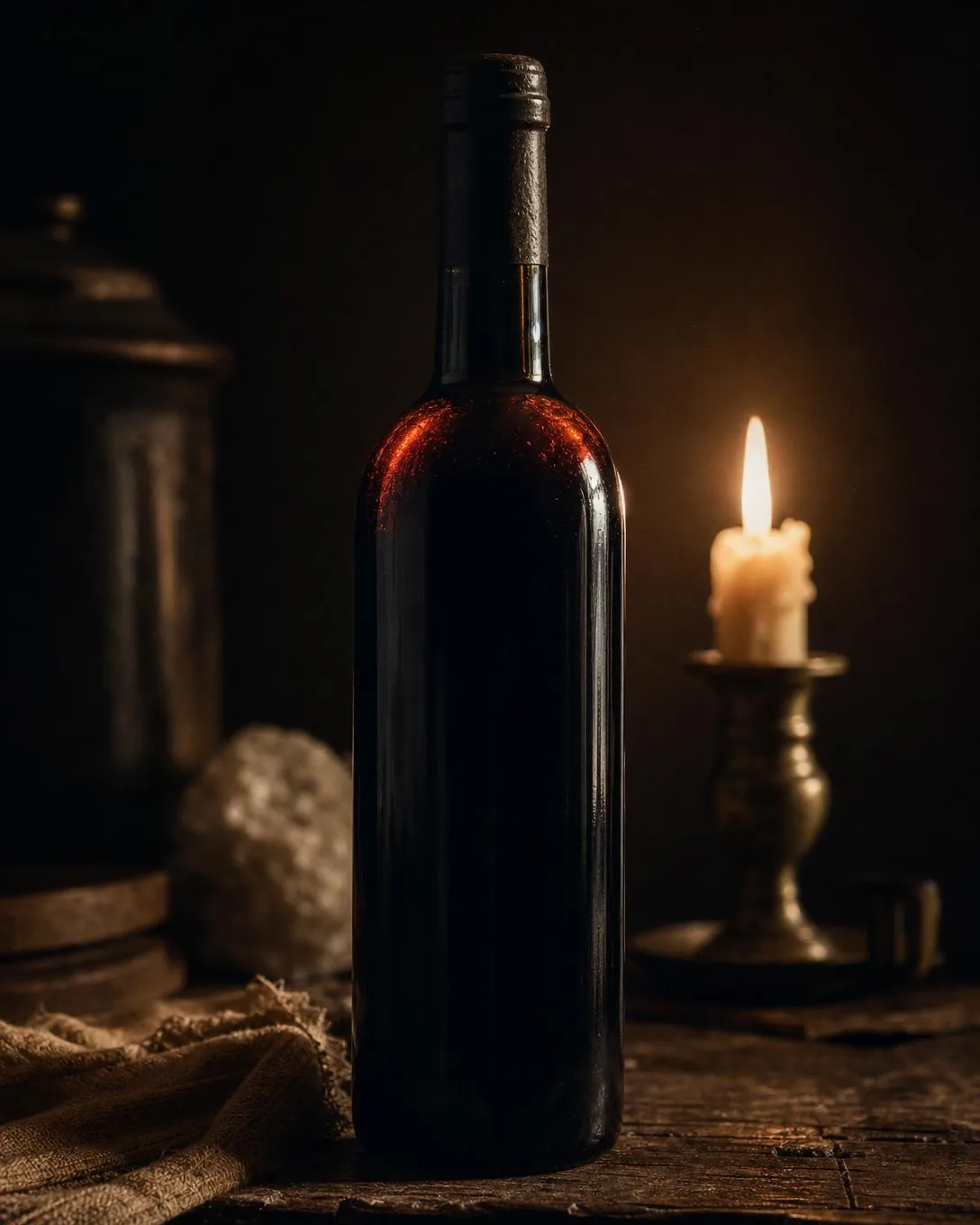
Haze
What you seeAgainst the same light: is the wine limpid, or does a soft fog hang in it — not particles that settle, but cloud that stays?
What it may meanPersistent haze in a wine that was bottled bright suggests something has happened since: microbial life waking, or proteins folding out of solution — either way, an instability the bottle was not sold with.
What it does not proveA whole school of serious wine is bottled unfined and unfiltered, wearing a light veil by choice; and any bottle just moved will fog with stirred sediment that an hour of stillness resolves. Haze is only meaningful in a wine meant to be bright, standing still.
The reading: give the bottle an hour of stillness. What settles was sediment; what stays is a question.
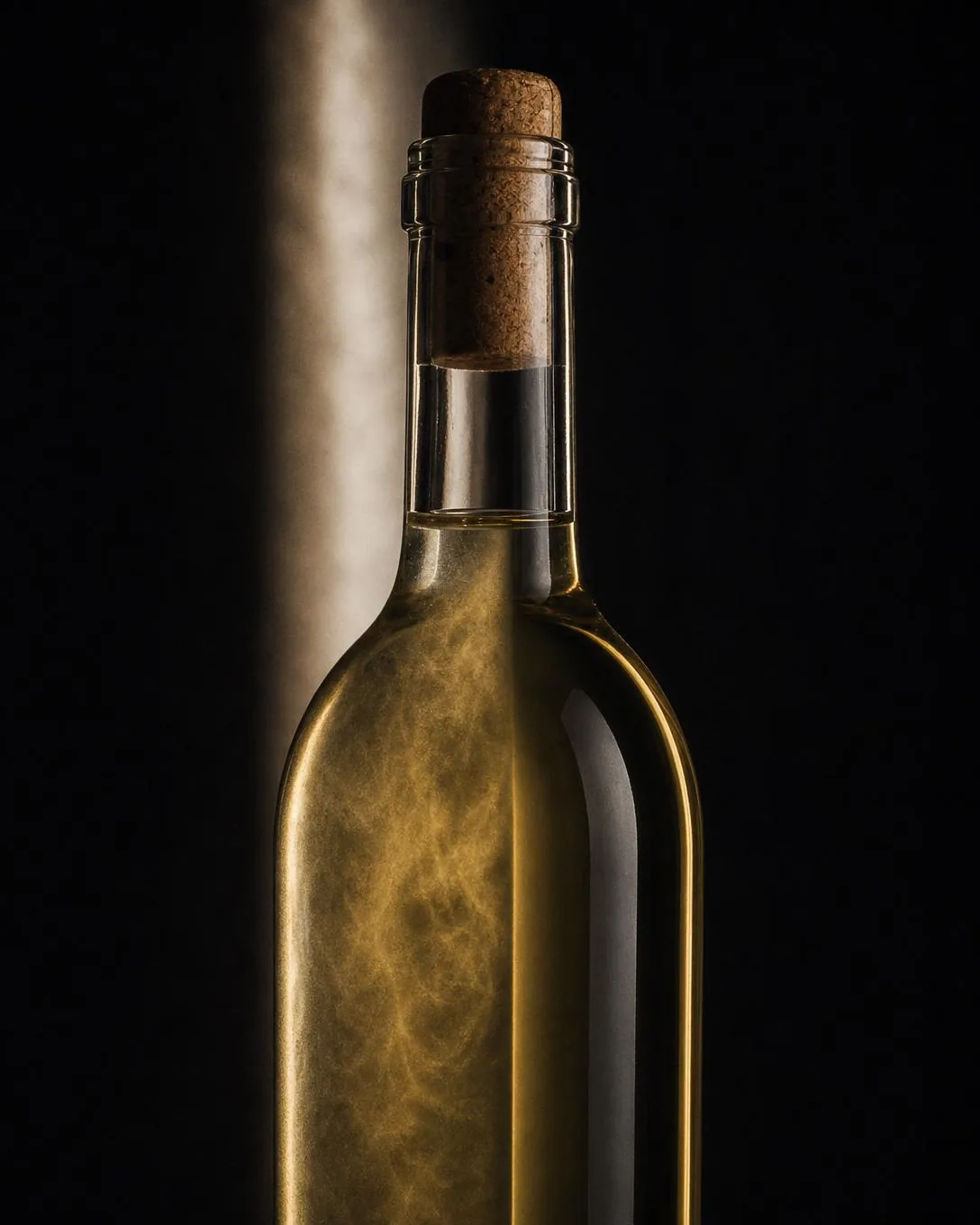
Sediment, read
What you seeIn mature reds, a fine dark crescent along the lower side of a bottle rested horizontal, or a settled disc in one stood up; sometimes small glinting crystals on the cork's face or the glass.
What it may meanDeposit is the mathematics of age: pigment and tannin bonding and falling out of solution, decade by decade — in an old red it is expected, even reassuring. The crystals are tartrates, wine's own harmless diamonds, precipitated by cold. What the sediment's position adds is logistics: a sharp, settled line means the bottle has rested; sediment in suspension means it travelled recently — a bottle to stand and forget before any judgement, let alone any cork.
What it does not proveSediment proves age and rest, not quality; its absence in a filtered wine proves nothing at all. And heavy deposit in a very young, commercially filtered wine is not age — it is a question for the seller.
The reading: sediment is the wine's diary of stillness. Undisturbed, it is provenance; airborne, it is only a bottle that needs to sit down.
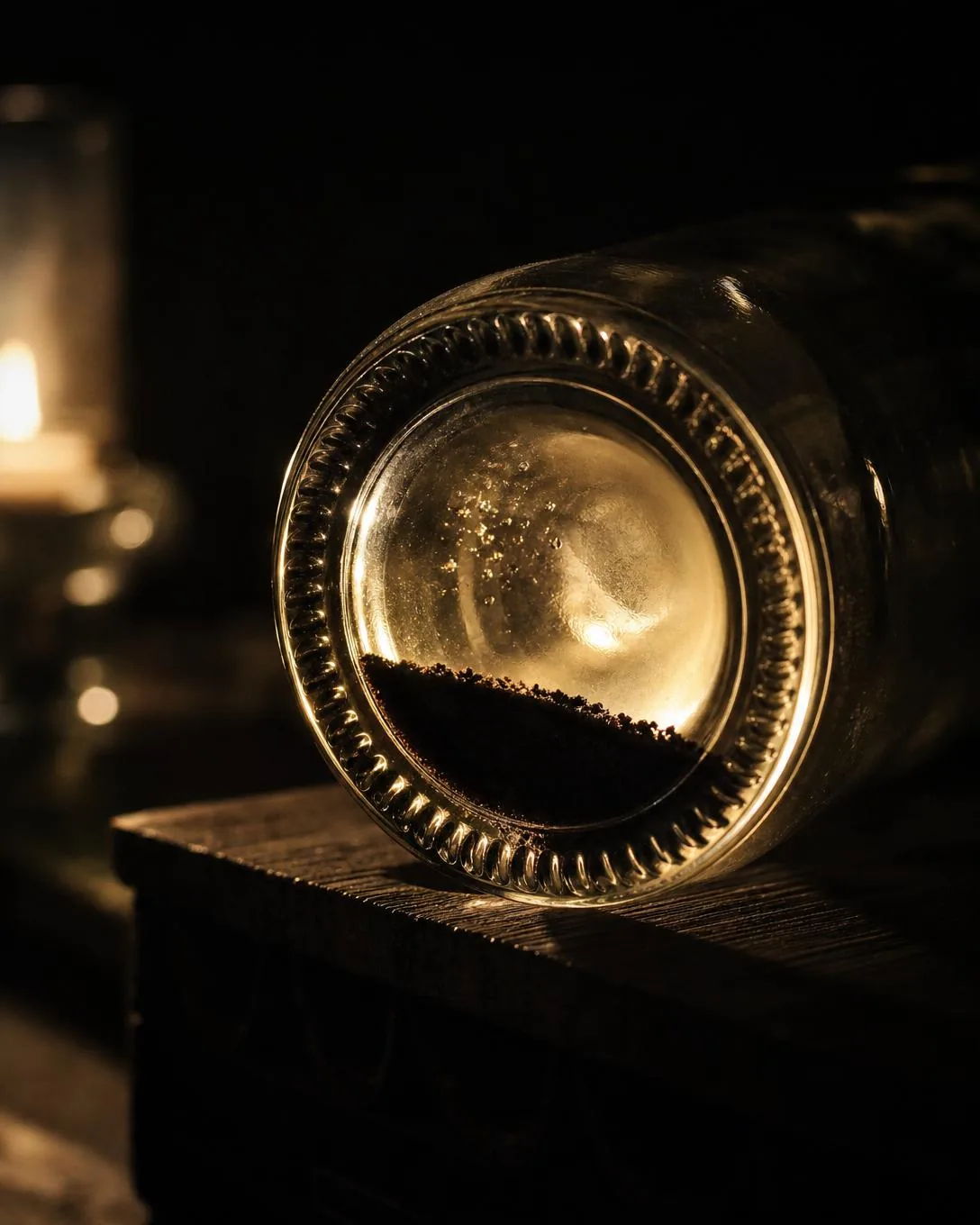
Zone four — The paper and the glass
The bottle's outside keeps a diary too. Paper records light, water and handling more faithfully than glass ever will — and the glass itself, read last, closes the inspection.
Light
What you seeRarely the damage itself. Light-struck wine confesses in the glass, not through it — so the eye reads context instead: pale or clear bottle glass, a label faded on one side as if by years of window sun, the fade running directional across the paper, a bottle that has plainly stood on display.
What it may meanLight — ultraviolet and part of the visible spectrum — degrades wine, driving reactions that strip freshness and can leave the sulphurous shadows tasters call light strike. Clear glass offers far less protection than amber or dark glass, which is why the risk runs highest in whites and Champagne bottled in it; even dark glass filters much, not all. A sun-bleached label is the honest proxy: paper burns publicly while wine burns in private, and a bottle whose label has faded has stood in light long enough for both.
What it does not proveA faded label proves exposure of that bottle, not of its case — the eleven siblings may have slept boxed in the dark while one stood for show. And an immaculate label proves little in return: light does its work through the glass whether the paper witnesses it or not.
The reading: the label is the bottle's sundial. If the paper has seen years of light, assume the wine may have been exposed too.
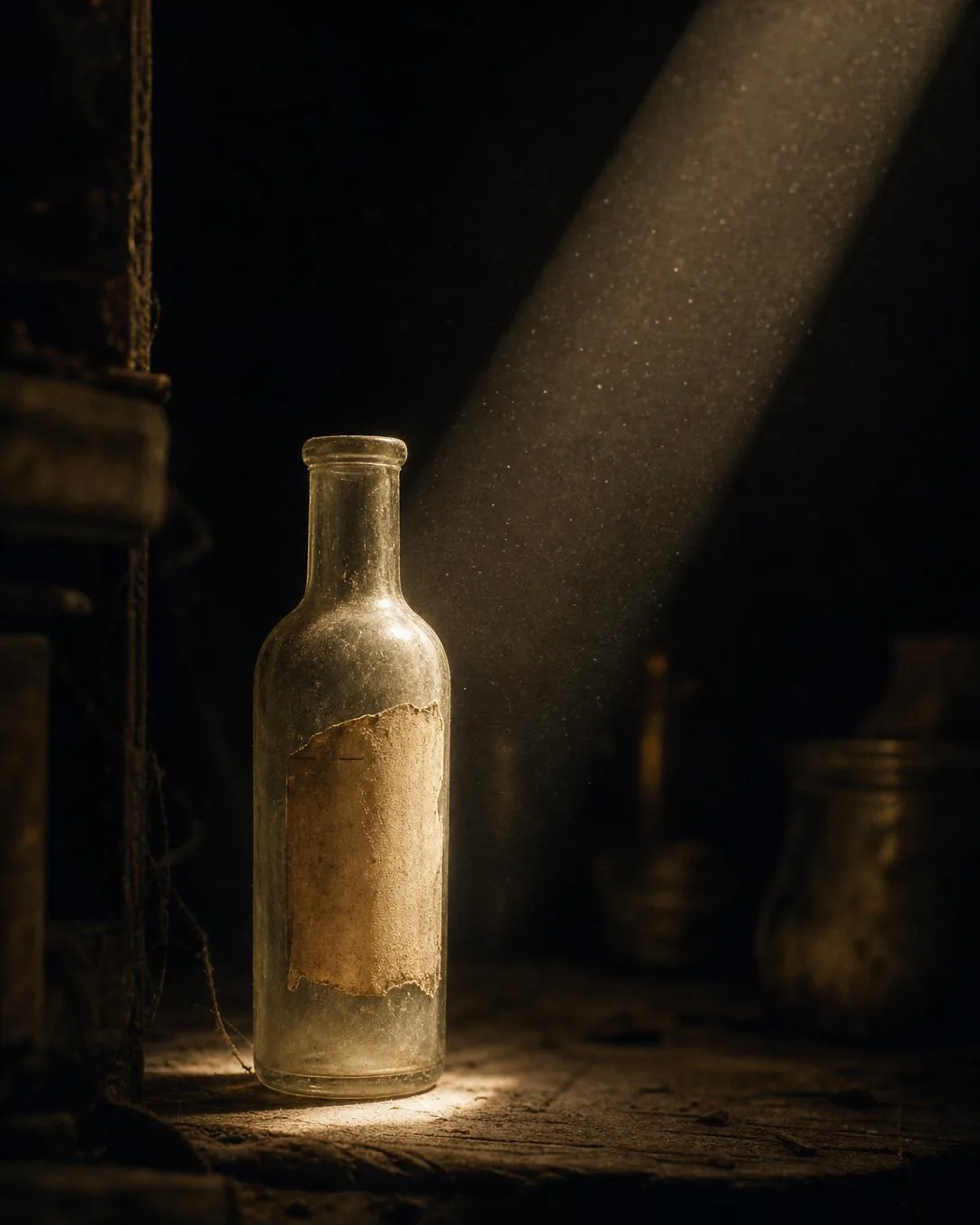
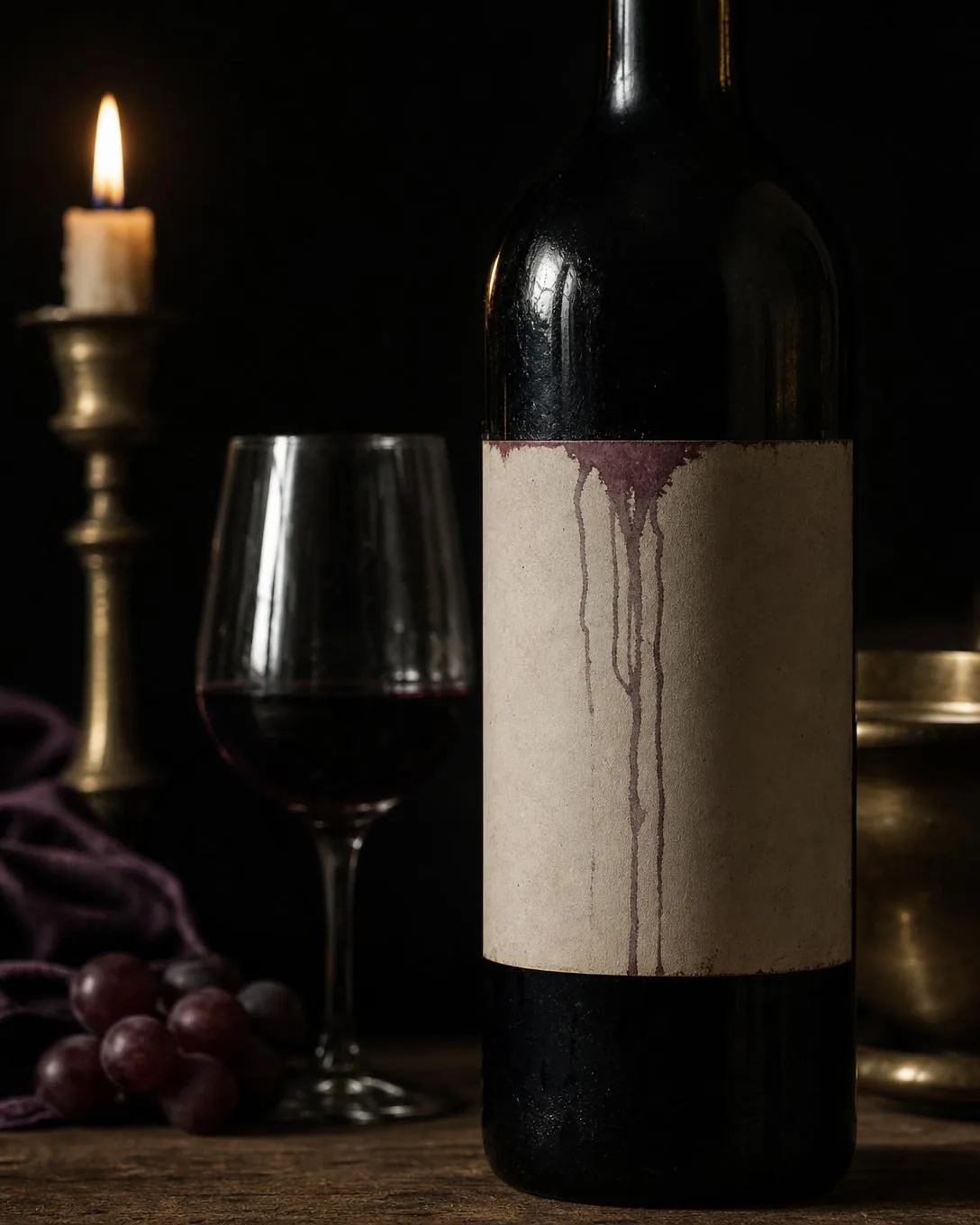
Wine-stained label
What you seeWine on the paper: narrow dried rivulets descending from the label's top edge; a blot along one flank; or the soft even blush the trade calls tissue staining, where wet wrapping paper pressed dye into the label. In the catalogues: SL, HSL, tissue stained.
What it may meanGeometry is the whole reading. Rivulets that begin at the top edge, aligned with residue at the capsule above, belong to this bottle — its own seepage, written downward, and the closure entries apply. A lateral splash with a clean capsule usually belongs to somebody else: a broken neighbour in the case, a cellar accident beside it. Tissue staining belongs to logistics — damp wrapping, not a failing seal.
What it does not proveA stained label with a sound, dry, un-stuck closure is history's cosmetics, not the wine's condition: something spilled near this bottle once. The stain matters only when its geometry points back up at the cork.
The reading: follow the stain uphill. If it leads to the capsule, read the closure; if it leads nowhere, it is somebody else's accident.
Damp-stained label
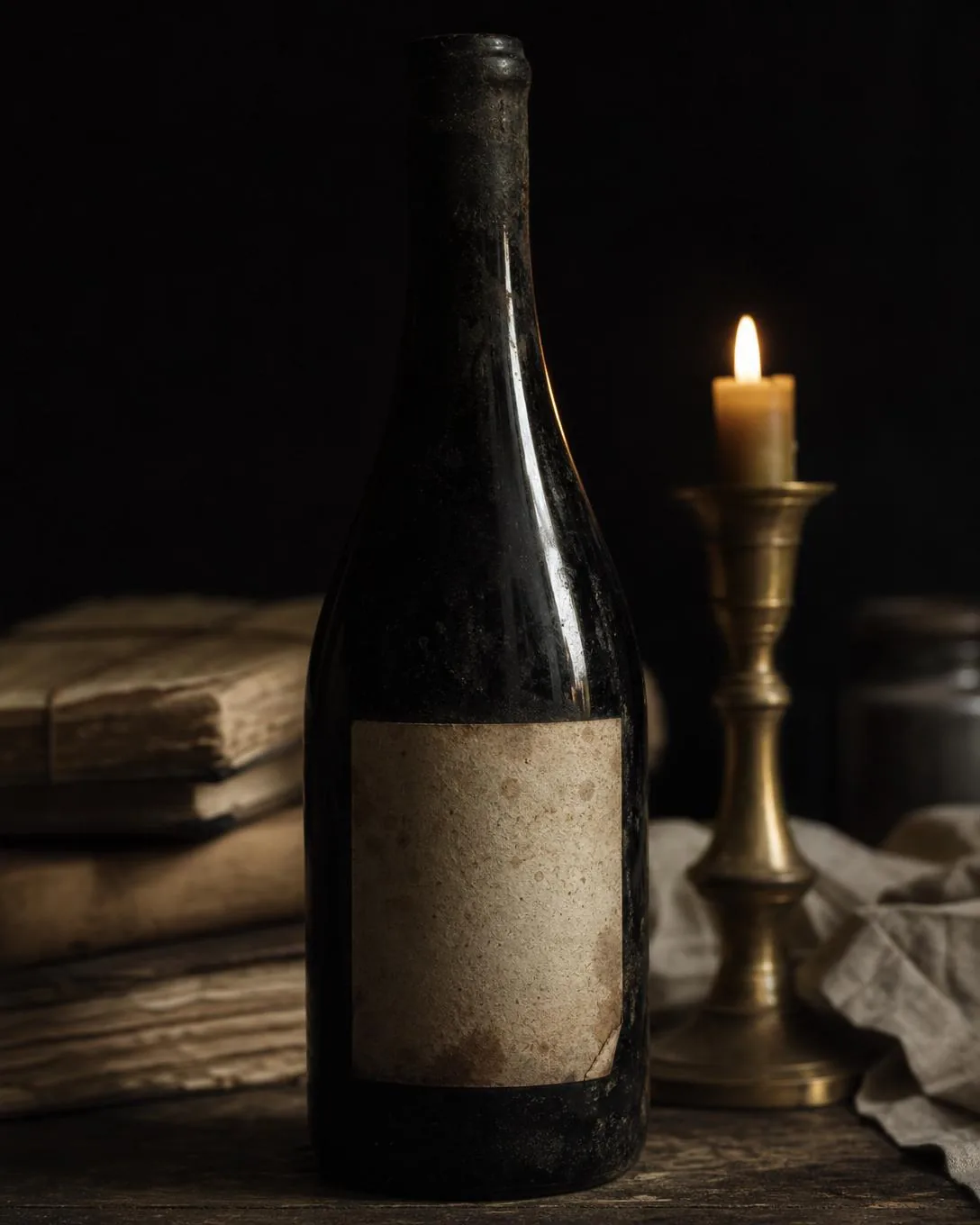
What you seePaper freckled with soft brown damp-spots; edges wavy where moisture found the glue; a corner rubbed grey by the stone lip of a bin; dust settled into the grain. The auction ledger's gentlest codes: BSL, bin-soiled.
What it may meanMost often, the signature of a long, humid cellar. The humidity that keeps corks supple is merciless to paper, and decades in a stone bin leave exactly these marks — which is why seasoned buyers read a bin-soiled label on an old bottle as reassurance, not damage: the bottle has lived where bottles should live. It is the contrarian truth this guide keeps returning to: some marks are provenance.
What it does not proveDamp is damp: a leaking garage freckles paper as convincingly as a great cellar, so the label's testimony still needs the closure and the level to agree. And a pristine label proves only careful paper — wines are re-labelled, sleeved and cellophaned precisely to keep paper young.
The reading: a weathered label on a sound bottle is a passport full of stamps. Suspicious is the old bottle whose paper has never been anywhere.
The glass itself
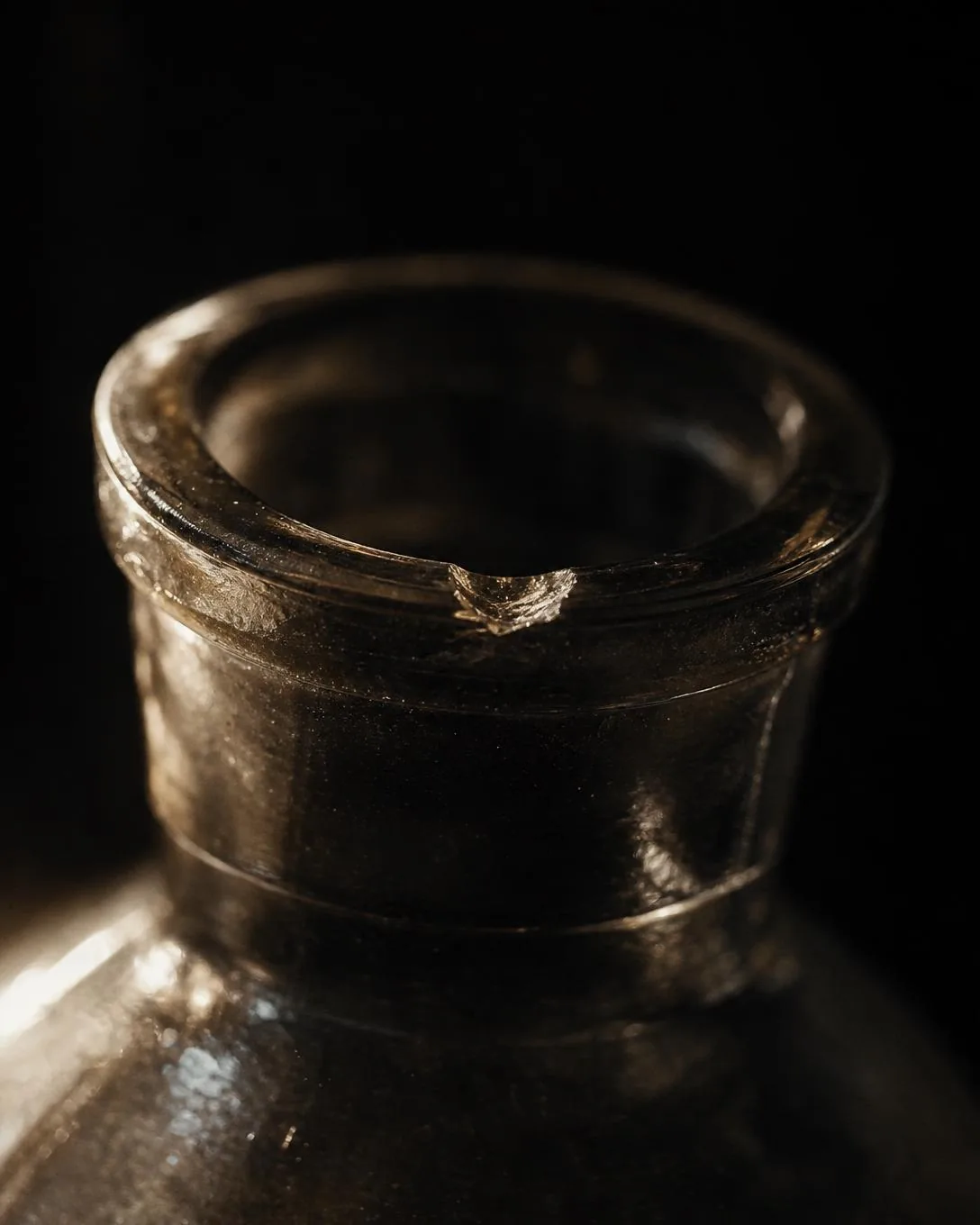
What you seeRead last, under raking light: the lip, for chips and flea-bites; the neck and body, for cracks catching the light as threads; the surfaces, for scuffs of handling; the whole, for whether the glass looks like its era.
What it may meanWhere a chip sits decides what it means. A small ancient flea-bite on the outer lip is cosmetic — hand-finished bottles carry them by birth. A chip that crosses the sealing surface where cork meets glass is different: the seal's foundation is compromised, whatever the cork's own health. Any true crack ends the conversation. And glass that looks wrong for its age — too modern a mould, too perfect a finish — is asking a question this guide cannot answer alone.
What it does not proveOld glass is honest about being imperfect: seeds, waves and asymmetries are period features, not faults. The glass condemns a bottle only where it breaks the seal or breaks itself; everywhere else, it merely testifies to handling.
The reading: the glass is the last witness, and the quietest. Chips at the seal talk; everything else just shows its age — and where identity is the question, hand the bottle to the Scorecard.
What this guide does not read
Condition is not identity, and neither is the wine. This guide does not taste anything, and it does not authenticate anything: a bottle can look impeccable and be wrong, and look weathered and be exactly what it claims. Identity — whether label, capsule, cork and glass agree with the producer's release — is its own discipline, and the first dimension of the Provenance Scorecard. A visual inspection reads risk and custody. The rest is said by the papers, and one day, by the glass.
Frequently asked questions
Can you tell if a wine is heat damaged without opening it?
Not with certainty, but heat leaves visible fingerprints: a cork pushed proud of the lip, a domed or wrinkled capsule, dried seepage at the capsule edge, and a fill level too low for the bottle's age. One sign alone is a question; several together are a pattern. Visual inspection reads risk, not taste.
Is a corroded wine capsule a bad sign?
Usually not by itself. Capsule corrosion is most often the patina of long storage in a properly humid cellar — evidence of keeping, not damage. It becomes a warning only when it travels with signs of seepage: dried wine at the capsule edge, a sticky base, or a stained label.
Is mould on a wine cork or capsule dangerous?
A dry veil of surface mould on the cork top or the glass is generally harmless: it reflects cellar humidity, which corks need, and it never touches the wine. What deserves attention is the difference between that dry veil and the sticky, crusted residue of seepage, which means wine has escaped past the cork.
What is an acceptable fill level for an old bottle of wine?
Read the level against the age. For Bordeaux shapes, base neck is excellent at any age, top shoulder is normal from about fifteen years, and mid shoulder is not abnormal at thirty to forty — the standard drawn up at Christie's in the late 1980s. Burgundy is measured in centimetres below the cork: two is excellent, and several more are tolerated in old bottles. The real warning is a shoulder fill in a young wine.
Is sediment in a bottle of wine a fault?
In a mature red, no — deposit is the natural result of age, and tartrate crystals are harmless. What matters is behaviour: sediment settled into a sharp line means rest; sediment in suspension means recent movement, and the bottle should stand until it clears. Heavy deposit in a very young, filtered wine is the exception worth questioning.
Can light damage wine through the bottle?
Yes. Ultraviolet and part of the visible spectrum degrade wine through glass — clear bottles offer far less protection than dark ones, which is why whites and Champagne in clear glass carry the highest risk. The damage itself is invisible from outside; the honest proxy is a sun-faded label, which shows the bottle has stood in light long enough that the wine may have been exposed too.
The Empty Drops is a private cellar where provenance is treated as evidence, not decoration.
How this cellar is kept →